Getting Paid Writing Gigs – Can I Handle the Pressure?

Is it really this easy?

Can I Produce What They Want?

This very question came to me as I perused the media jobsite Mediabistro, just to see what they had to offer. I read job ads and descriptions, including a sidebar on each page as to what a Proofreader does, what’s expected from a Copywriter, etc.:

What does a Proofreader do?

A Proofreader is in charge of making sure work is reviewed before it goes to print. Proofreaders check documents for grammatical errors, along with looking at the body of work stylistically and making sure the margins and spacing is correct. While the job can overlap with an Editorial job, a proofreader mainly ensures that an article is free of grammatical errors. Ultimately, a proofreader works to make sure content is free of typographical, grammatical, spelling, punctuation, syntax, formatting and other such errors.

From Mediabistro.com

The job description of Proofreader fit me (and my inner Grammar Nazi) to a tee but the degrees required make me hesitate, make me question my abilities – can I provide what they need?

Each sidebar noted that a degree in English, Journalism or Communications was necessary. Is that true? Plenty of degrees require writing skills but I do wonder if I would receive consideration even though none of my degrees are in the requisite fields listed.  

What are the requirements to become a Proofreader?

Similar to the requirements for most Editorial roles, this person typically has a bachelor’s degree in English, Journalism, or Communications. This person must have a high threshold for tedious work as well because most of their work will be very specific last-minute edits that sometimes they only have the eye to see. Ultimately, this role requires impeccable attention to detail and grammar.

From Mediabistro.com

Sound the Death Knell

And there it is. The anxiety-producing, I-doubt-they’ll-even-consider-me-for-the-position willies. The sheer weight of fear of that level of responsibility crushes me, keeps me from moving in the direction of ever getting a paying writing gig. How does one get past this hurdle? If I’ve been writing articles for newsletters and journals for thirty years, how is it I still think of myself as not talented enough or good enough? I’ve written books, for crissakes. Certainly experience equals or trumps any degree, right?

Just Gimme a Chance!

Maybe all I need is that first gig, that first shot at proving to myself and the contractor that I can do it. I can write. I can proofread. I can meet your deadline. I can write a paragraph or 1000 words on a topic close to your heart.

There are thousands of magazines out there. If I could drum up the courage and send out some queries, I’m sure I’d find a few takers. I get so close – I start writing an article or informational piece. Next step is the query – this is where I get stuck. So many magazines and publications – where to begin? What are their submission guidelines? The impending confusion and overwhelm pulls me back into my shell. And there I sit, a writer unpaid and afraid to reach for something more.

I can’t be alone in this – this desire to prove that I’m good enough to be paid for the work product I know (on some level, anyway) I can create. Being insecure and a writer – they do tend to go together often, don’t they? Amazing that some writers accomplish anything at all.

I’m still working on that… 
AI Generators: The Alleged Violation of Artists/Creatives and How Your Work May Be Affected

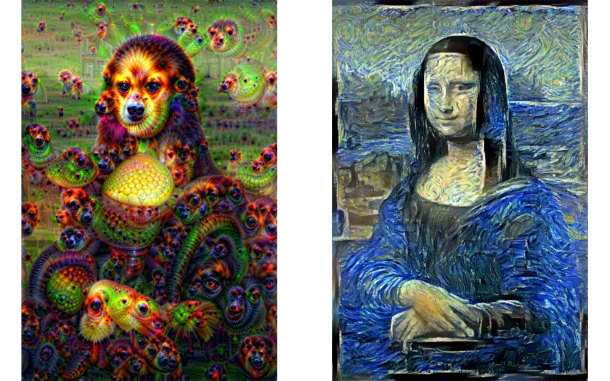
03-pjfinlay-deep-dream-and-neural-style-transfer-original (1)

Source: Google Images/”Mona Lisa” with DeepDream effect (left) and Neural Style Transfer (right) created by P.J. Finlay. Image: Wikipedia.

I couldn’t believe it when I came across several articles written on the alleged plagiarism and outright (copyright) theft of artists’ works by AI generators. All in the name of ‘open-source’ and ‘free access for the world.’ Apparently, AI systems “are being trained on vast amounts of copyrighted work with no con­sent, no credit, and no com­pen­sa­tion (Stable Diffusion Litigation, 2023).”

I’m not surprised – I saw it as an eventual situation once somebody (or, in this case, several somebodies) figured out how to copy the works of a multitude of artists, including famous artists, for the supposed intent to “teach” AI generators how to then create something new, something different and supposedly something not already copyrighted. AND make money off it.

Huh.

Getty Images and several well-known artists have filed a class-action lawsuit against companies Stable Diffusion, DeviantArt and Midjourney, claiming copyright violation:

“In a press statement shared with The Verge, the stock photo company said it believes that Stability AI “unlawfully copied and processed millions of images protected by copyright” to train its software and that Getty Images has “commenced legal proceedings in the High Court of Justice in London” against the firm.”  The Verge, January 17, 2023


Stable Diffusion is a 21st century artificial intelligence software product. It is part of a category of AI systems referred to as generative AI. It’s based on a process called diffusion, where the AI program is trained to ‘reconstruct’ (their word, not mine) images that it’s been fed. The program then supposedly creates new and original (?) images. Yeah, right.

According to an article on ArtNews:

“The plaintiffs claim that these copied images are then used to create “derivative works,” a work that it “incorporate[s] enough of the original work that it obviously stems from the original,” in the Cornell Law School’s Legal Information Institute’s definition. The image generators, according to the plaintiffs, are nothing but a “21st century collage tool” that has the potential to greatly damage artistic industries and was built off of protected works.” (Read it here.)

I have to admit that I have taken images off the internet  – usually from free sites like Pixabay but occasionally from Google Images – and re-mastered them by changing color, removing certain aspects… and then using them as a picture in my blog post. In other words, I don’t profit from the changed picture. These AI-generated works are a whole new ballgame and artists may be on the losing team if the lawsuit doesn’t set a precedent. 

Here’s food for thought: After Korean artist Kim Jung Gi died, someone used Stable Diffusion AI to “create a model” that would reproduce works in his style. I understand being a fan of certain artists – I love Vincent Van Gogh’s works but I would never, could never, copy his work and call it mine (except for the odd paint-by-numbers of his works that I’ve done since I can’t afford the originals).

Also according to ArtNews (and this is an important distinction, perhaps):

“First, only specific images, not styles, are protected by copyright. Meanwhile, collage is a protected medium under “Fair Use,” a legal doctrine that creates exceptions to copyright law  “for purposes such as criticism, comment, news reporting, teaching (including multiple copies for classroom use, scholarship, or research)” and “transformative” creative production. Whether or not the lawsuit accurately characterizes diffusion is also in question.”

This is a complex situation, without a doubt. Digital media and content lag far behind laws that might protect content creators like us. Will if affect your work? Do you think that the remixing of copyrighted works should be legal? Do you think it’s a copyright violation? (omg – stealing poor Van Gogh’s works is a TRAVESTY, in my opinion)

Perhaps only time will tell. We are heading into new and unfamiliar territories with AI and all if its capabilities (for good and bad). I fear we will reach a point where no work of art (paintings, novels, etc.) will be protected because AI experts will be able to take what they want and no one will be able to stop them.

I guess we’ll find out soon enough. In the meantime, PROTECT YOUR WORKS.


To read in full on this litigation/copyright issue:

Stable Diffusion Litigation

The Verge article

ArtNews article

#authors #writers #amwriting #aigenerators #stablediffusion #theverge #artnews #copyrights #contentcreators

Van Goh remake

Source: Google Images/https://mpost.io/exploring-the-value-of-ai-generated-art/