
Write for Magazines and Get Paid Too!

nat geo travel_istock

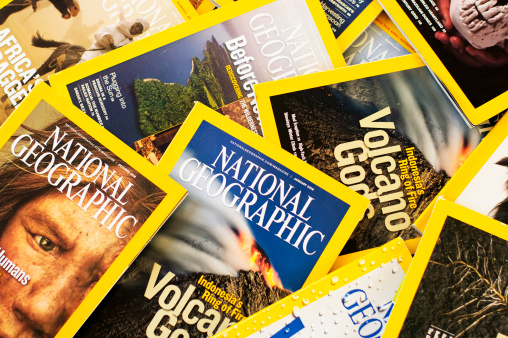
La Jolla, California, USA – September 16, 2011: National Geographic magazines taken in a studio. Source: pixabay.com/istock

Be a Bigger Needle

It’s a subject I’ve come back around to several times over the past few years. These days, competition for publishing articles in the digital world is both astounding and depressing; a writer trying to get his/her articles published online is like the proverbial needle in the haystack. Only the haystack is now steroid-sized and the needle ever more microscopic. You need to be the bigger needle.

Not All the Same

Magazine readers (like me) are an entirely different audience than people surfing the web. Sure, there’s an occasional overlap, but not much. To me, printed publication readers are more patient, more likely to read as a relaxing pastime, and probably more educated or white collar. If we writers don’t find a way to get our articles into printed publications, that’s a whole different audience whose readership we’re losing.

There continue to be many faithful magazine readers, just as there are faithful readers of the physical book (I’m one of those on both counts). While the online life is definitely for the younger generations, many older folks have smartly adapted, even succeeded, online. 

Think about it: your articles in those printed publications will increase traffic to your blog, increase your number of followers, even help you build a fan base or at the very least better connect with other writers. It’s a win-win situation. Do you keep an updated bio on hand? I do, and I tweak it from time to time as my experiences increase. This is an amazing opportunity for magazine readers to find out more about YOU.  

You Gotta Start Somewhere…

Gigs can pay as low as $.10 a word up to $2.50 a word, depending on the magazine and/or your storytelling skills. These gigs can also help you get other writing gigs, as editors routinely communicate, maybe even socialize, with each other. Wouldn’t you love to be the topic of discussion at one of their business meetings or social gatherings? I certainly would.

Use previous blog posts as a basis for a magazine article; use that magazine article as a basis for a future blog post. In a previous post, I wrote about turning your blogs into a book (and vice versa). Once you pick up steam, there’s no stopping. It’s also a path to book deals, partnerships, maybe even speaking engagements.

Other Options

Trade magazines don’t pay much (if at all) but it’s good exposure if you have knowledge to share in one of these publications. Then there are custom publications like Costco or Sam’s Club, maybe a local bank or insurance agency. Get creative (after all, you’re writers, for heaven’s sake) and make a list of magazines/publications that interest you. Check out their query criteria, then go for it. Nothing lost, only gained – regular gigs, quitting the day J-O-B, earning a living while freeing up your schedule, increased traffic to your blog, etcetera, etcetera.

What are you waiting for?

#thewritinglife #author #nationalgeographictraveler #blogging #selfpublishing #writeformagazines #costco

The Rise of Yellow Journalism in the Digital Age: What Writers Can Do About It

A Bit of History

It’s ironic that what began as a feud for readership and sales between two newspaper giants in the late 19th century has become commonplace practice for reporting so-called “news” on social media. Hard to believe it all began with Joseph Pulitzer (for whom the most prestigious award in Journalism is named, ironically), who purchased the New York World in 1883. Pulitzer used a sensational style of reporting for his stories and crusades against political corruption and social injustice to win the largest newspaper circulation in the U.S.

Along came William Randolph Hearst in 1895, who purchased a rival newspaper, the Journal. Hearst’s determination to be number one led him to outdoing all his competitors, including Pulitzer’s New York World,  in sensationalism, crusades, and Sunday features. Hearst stole a cartoonist from Pulitzer, which created a rival picture series that drew so much attention that the term yellow journalism was born.

Yellow journalism and the yellow press are American terms for journalism and associated newspapers that present little or no legitimate, well-researched news while instead using eye-catching headlines for increased sales.” (Wikipedia)

Yellow Journalism Lives on Social Media

Following the recent siege (read: insurrection) of the Capitol in Washington, D.C., prompted by both disinformation and misinformation peppered with a deluge of yellow journalism news bytes all over the Internet, I couldn’t help but notice how readily many accepted what they read on social media sites. TMI, or ‘too much information’  – or more aptly – disinformation, prompted such an outburst as to endanger the lives of people and our political system at its core.

“Fight it but don’t ignore it, show it for what it really is: a pathetic attempt to manipulate the truth for the sake of ratings, attention, or personal and political agendas.” Mestengobooks, January 2021

As writers, reporters, and journalists, there is an obligation to maintain the integrity of our words. In a previous post, I cautioned writers and speakers to use words carefully as they have the capacity for great power:

“Write from the compassionate heart, support a peaceful co-existence and community goals, stand your ground without being divisive.” From Words Have Power post, July 2020

This phrase rings more true now as we face a pandemic, interference with our voting rights/system, and an incoming/new Administration, all susceptible to SM disinformation.

End Yellow Journalism!

The sheer volume of the 24/7 news cycle is overwhelming. At what point do we say ENOUGH? Are we even able to filter it all? (Of course not.) Or must we choose to step away from the constant download of so much disinformation? Is it even possible to discern the true news from the fake news?

Yellow journalism must not, cannot and should not, replace words written with integrity. Fight it but don’t ignore it, show it for what it really is: a pathetic attempt to manipulate the truth for the sake of ratings, attention, or personal and political agendas.

Pledge to maintain the integrity of your words. Promise to use your power wisely. Stop yellow journalism in its tracks.

#journalism #writers #yellowjournalism #politics #tellthetruth #twitter #instagram #democracy #fakenews #stopyellowjournalism #writewithintegrity #wordpower #truth