Dare to Be Different… Because Different isn’t Bad, it’s Just Different…

User comments

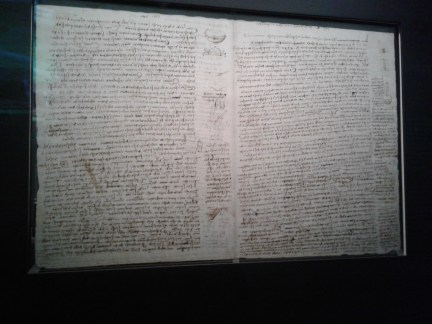
My (illicit) photo of DaVinci’s backward handwriting, from the Uffizi in Florence, Italy, 2018 (security guard caught me before I could take more shots)

Don’t Fit the Mold? Me Neither!

I’ve always been a square-peg-round-hole kind of person. I have never fit into any particular mold, which is why I never hung out with any ‘popular’ crowd in grade or high school (or at any other time in my life). I realized early on that to do that would mean I would have to give up my individual ideas for the sake of the ‘group mentality’ one finds in those so-called popular cliques.

From the outside, they appear to be the kind of people every other kid in school (read: nerds, outsiders and smart kids) yearns to be. Yet anyone who has ever been on the outer edge of one of these social circles knows the truth of their required conformist behavior.

A ‘Different’ Light Bulb

It took me through my early college years to understand the label of ‘different’ and decided it was complimentary even though it was never intended to be anything but demoralizing. I haven’t minded being different. My ideas, ideals, points of view and opinions were almost always the Devil’s Advocate in any room or group and I felt that was my strength, to see what others cannot. What I have struggled with is how I was treated back then, because I didn’t perceive/experience the world the way everyone else did (and still don’t) and how it has shaped my (occasionally negative) self-perception.

All along the way I was bullied by people who couldn’t handle my ‘different-ness’ and thus belittled me because they, it turned out, were the problem. They didn’t know what to do with a kid who saw the world in the unique and colorful way. They sent the message that being different was something terrible/wrong, something others should not or could not tolerate. I upset their status quo and the only way they knew how to respond was to knock me down physically and verbally.

A Genius of a ‘Different’ Color

Leonardo DaVinci, the famous Italian painter (of the Mona Lisa and so much more), was one of those ‘different’ people, in ways perhaps too numerous to count. His artistic talents (painting, sketching, sculpting), math skills (polymath), engineering, architecture and more, were so far ahead of his time that many couldn’t see his brilliance and foresight. To completely define his ‘different-ness,’ DaVinci, left-hand dominant, wrote fluidly in reverse composition (see photo above) in his native Old Italian.

I can use my right/left hands almost equally in some situations but I’m mostly right-hand dominant. I sometimes prefer one over the other in certain situations – I batted lefty/righty in baseball, played field hockey lefty and tennis righty.

It dawned on me that right-handed people write outward from the body. It’s a natural flow of movement. I tried writing backward with my left hand and, though a bit awkward at first, found that writing away from the body on the left side is just as natural. You have spend some time thinking about how to shape the letters in reverse. I was intrigued by the process.

Many ‘experts’ have pondered why Da Vinci wrote in reverse. I can’t help but theorize it was because that is the natural movement/flow for someone who is left-hand dominant. Regardless of the reason, it was one of many aspects that made him different – not wrong, not bad, just different. I can’t imagine our modern life without his contributions, can you?

Celebrate your different-ness. Don’t let others knock you down for seeing the world uniquely. Use your artistic abilities to express who you are and what you see, not who/what others want you to be.

Remember, it’s their failing, not yours.

#inspiration #amwriting #blogger #writeroninstagram #leonardodavince #monalisa #polymath #painter #sculptor #ItalianRenaissance #arthistory #itsgoodtobedifferent #beyou #loveyourself #beyourself #believeinyourself #freeyourself #goodvibes #selfcare
Things That Make You Go…’Hmmm’

Hmmm

Credit: Google Images/bjaycooper.com

Inevitable

It was only so long before artificial intelligence (AI) not only infiltrated our every day lives but took command of some aspects, with or without our permission. The question of whether machines will or can replace us (or much of the work that we do, including writing) is moot. AI is here and the worlds of good and evil (e.g., hacking or stealing intellectual property/IP rights) are colliding.

AI technologies are evolving at such a rapid pace it’s hard to keep up legally. It’s important to understand fully your rights as a writer/creator and how to protect your work products. From attorney Matt Knight on his Sidebar Saturdays blog:

“As artificial intelligence (AI) continues to develop, it’s becoming increasingly capable of creating works indistinguishable from those created by humans, which raises intriguing questions about intellectual property rights. One such area of concern is what can be copyright-protected in a work generated by AI. Another area is the potential for infringement of copyrights by AI systems.”

Basic Copyright Law

According to Matt Knight, “copyright law protects original works of authorship fixed in any tangible medium of expression” no matter how you created them. Your creations are yours and no one else’s. However, Matt writes, “[c]opyright protection does not extend to ideas or facts; instead, it safeguards the expression of those ideas in a tangible form.” (my bold added)

Except…

Per the U.S. Copyright Office, there is no copyright protection for works created by non-humans, including machines or other automated means. And…

” …in March 2023, the U.S. Copyright Office guided creators working with AI tools on registering their works. The policy statement notes that only human-made creations are eligible for copyright protection. A human may select or arrange AI-generated material in a sufficiently creative way that the resulting work as a whole constitutes an original work of authorship. Or an artist may modify material originally generated by AI technology to such a degree that the modifications meet the standard for copyright protection. In these cases, according to the Copyright Office, copyright will only protect aspects of the work made by the authoring human, i.e., resulting in partial protection of entire works.” 

Sidebar Saturdays, Mar 2, 2024

Robot vs. Human – Who Has the Right?

There’s an interesting article in Smithsonian magazine on AI robots re-creating sculptures by Michelangelo and other famous sculptors (Bernini, etc.). While robots are able to re-create these famous sculptures, humans are still required for the finishing touches. Per the U.S. Copyright Office, only those finishing touches would be protected. Is an AI shortcut truly an artistic expression of human creativity? Or is it lazy art, stealing from the Great Masters and the rest of us creators?

“Today, Tincolini, Massari, and their team of technicians and artisans create sculptures on commission for artists, architects and designers, and they sell their technology to clients around the world.”

“What used to take months or even years can now be done in days,” he said. “Machines can run round-the-clock. They don’t get sick or sleep or go on vacation.”

by Elain Sciolino for Smithsonian Magazine, December 2023

And So It Goes…

There are cases currently pending, Matt writes, including “one high-profile case is the New York Times vs. Microsoft, Open AI, in which NYT alleges that OpenAI and Microsoft unlawfully engaged in widescale copying of millions of copyrighted news articles, investigations, opinion pieces, and more to create artificial intelligence products, all without permission or payment.”

Microsoft argues ‘fair use’ because they consider it to be “transformative use” for training AI models. I question this argument because they accessed copyrighted material, regardless of how they were going to use it. Maybe Microsoft concludes that since they don’t profit directly from the “transformative use” it’s okay to download the IP materials. I’m curious as to how this plays out and what kind of precedents will come of these AI cases.

It Was Nice to Share

I’ll be honest – with the advent and proliferation of AI, I’m nervous about what could happen to any of my IP. I feel like I’m becoming more of a hermit, hoarding my works for only myself to enjoy. I’m anxious about losing royalties (for many it’s how creators make a living or supplement their income) and whatever credit might come my way from an appreciation of my work product. 

Have you thought about how you will protect your IP? Do you use AI in your work and to what extent? Familiarize yourself with copyright laws regarding AI.

Protect your work, your livelihood.

#artificialintelligence #writer #author #AIrobots #Michelangelo #famoussculptors #Italianart #copyrights #protectyourwork #painter #poet #Smithsonian #Microsoft #NYT #newyorktimes #intellectualproperty #lawsuit #OpenAI #fairuse #copyrightinfringement ##originalart #Bernini #lapieta #AI

Better Late Than Never

Chinese red dragon

Credit: Google Images

Almost Forgot…

Okay, I’m a little behind the eight ball this year…

I’ve had a rough few weeks, so my mind has been on other, more important (or less trivial) things. This is the time of year where I like to remind all of you writers to clean out your old files/projects/works, old stories that will never see the light of day and any other projects that have been at a standstill for at least a few years. Time to heave-ho. Put them in your “file 13” (trash can – digital or paper).

A Chance to Begin Again…

Today is the first day of the Chinese New Year, the Green Wood Dragon 2024. Gung Hay Fat Choi – which is Cantonese for “congratulations on prospering in money.” In Mandarin, it’s Gong xi fat cai

“It is a popular saying you’ll hear frequently during Chinese New Year. Unlike Americans, this Chinese congratulatory greeting is not based on something already achieved but instead is a wish or hope that you will achieve what you desire, hence the congratulations in the phrase. It’s a blessing of good fortune and prosperity (it’s not always money, as many Chinese believed that enough food to eat also represented abundance in one’s life).”   MB post, January 26, 2020

This is supposed to be a fortuitous year for many, so I’m crossing my fingers. Because my life has had some major up- and downswings lately, I figure I need all the help I can get. I added a Chinese Dragon as wallpaper to my Google. Added a smaller one to my phone for luck. Tonight I will eat some potstickers (can’t really find Chinese dumplings where I live, it’s a bit rural) for good luck. If you can find mandarin oranges (they’re in season here), buy a bunch (at least 5) and place them in a nice bowl on your kitchen table (another representation of prosperity = enough food to eat). Keep the bowl filled as much as possible through February.

Cleaning House, Again…

In 2021, I wrote about scraps of a writing life – yet I am still clinging (versus just holding on) to some of those unfinished projects and haven’t touched them in years. What am I waiting for? It dawned on me yesterday as I uninstalled a few unused apps on my phone: there was once a time when I lived my life fully and without any of this digital crap. Why am I hanging on to stuff I don’t use? Do I fear missing out on something? Why am I afraid to let go? What exactly do I fear? Why oh why am I saving website links? Why all the digital clutter?

Cleaning house, including computer files, is good for the spirit; it releases stuck energy and makes you feel like you accomplished something worthwhile. So what are you waiting for? Get off your butt and get busy cleaning out those old writing projects that no longer serve a purpose in your life. Let go. (This is the hardest part because we may feel that we failed instead of seeing the incomplete projects as works of exercise that stretched our minds but weren’t meant for public consumption.)

Refresh Your Memory

If you haven’t yet read it, please visit my post on organizing your writing area to empower you and your work. Check out how to clear out old work. Organize (or re-organize) your writing space. Learn how to lay your past projects to rest here. Re-read them if you will, refresh your memory. Let this new year begin with a new version of you, a better version of your work. After all, life is about progress, not perfection, right?

#writing #fengshui #chinesenewyear #greendragon #2024 #writersoninstragram #WritersDigest #WriterBeware #mestengobooks #prosperity #abundance

red dragon phone2

Credit: Google Images

The Seven-Year Itch…Plus One

8 yr anniversary

Credit: Google Images/Redbubble.com

Lightbulb!

I knew it would come to me sooner or later. I’ve been spending this afternoon re-reading old blog posts to correct grammar, remove now-defunct website links, update format styles and break up long paragraphs into smaller, more easily digestible bits. I knew going over older posts would inspire me and I’d come up with a topic for my next post. I just clicked on my sixth-year workiversary post and realized I now had another two years under my blogging belt.

*raised eyebrow*

Next month will be my EIGHTH year as a blogger. Honestly, I can’t remember ever sticking with anything for this long. As I wrote in that previous blog (Feb 2022):

“It’s a form of adult-ing in which I rarely engage.”

True dat.

Running Out of Good Ideas? Not Likely!

While I occasionally struggle with ideas for this post, I have to say I’m proud of the posts I’ve written here. I’ve had some very good ideas, well-written posts and good suggestions to improve both your writing and your storytelling, as well as a few personal revelations. All in all, I’d say I’m happy with what I’ve shared the past eight years.

To again quote from the six-year anniversary post, “I don’t know how much longer Mestengo Books will be around but I do know this: both your presence and your absence has bettered my writing and clarified my creative process.” It’s the honest truth and I hope to continue this for at least a little while longer. I also hope many of you will continue to take the ride with me. Let’s hang out until it’s time for me to walk away, until it’s time to find another creative outlet I’m willing to commit myself to for a similar period of time.

That’s growth, maturation, shifting perspectives and priorities.

“Everything is ephemeral, both that which remembers and that which is remembered.”  Marcus Aurelius

#happyanniversary #Mestengobooks #writerslife #blogging #storytelling #creativity #selfpublishing #writersdigest #writersofinstagram #authorsontwitter #fictionwriters #nonfictionwriters #writingcommunity #tuesdaytips

Life is Like a Badly Designed Parking Lot

zigzag

Driving Me Nuts

Yesterday I found myself swerving, zigzagging and avoiding cars driving straight towards me in parking lot lanes barely wide enough to be two-way. The one-way lanes in this lot were so narrow I had to slow down and carefully go around any trucks or SUVs with their rear ends sticking out of the short lanes to avoid hitting cars parked on the opposite side.

*deep sigh*

As I came to a turn, I prayed idiot pedestrians would actually look both ways before stepping out onto the road (in CA they NEVER do that) so I won’t chance hitting one (not that I’d be all that upset if I did). I slammed on the brakes for two guys indifferent to my presence.

As I navigated stop signs and idiot drivers through this parking lot from one side to the other (it’s a shortcut to avoid several lights though I’m rethinking the route now), something dawned on me and I exclaimed it out loud to myself (multiple times) in the car:

“This badly designed parking lot is a metaphor my life here in northern California!”

*Sheesh*

Not the Metaphor I’d Hoped For

2023…this has been a spectacularly challenging year (even though a Black Water Rabbit year, according to Chinese horoscopes, was supposed to be good for me in the area of finance.)

*harrumph*

Temp work all but dried up and permanent work has been beyond my grasp. I can’t explain the feeling of how navigating the parking lot seemed a strange parallel to what my life has been here: a lot of dead ends (choices leading nowhere), stop signs (no, you can’t go that way), people crossing my path (for brief periods and not caring much ), narrow lanes (are you sure this is the right path? not a good fit for you).

I was overcome with such a strong feeling of discombobulation that I now struggle to put it into words. Frustration doesn’t even begin to describe it…it’s as if, no matter how hard I try or which choices I make, the end result is the same: nope, this road ain’t gonna work for you. 

stopsign

Such is Life…

But life is like that sometimes, right? We’re confronted by numerous adversities, both personal and professional, in our lifetimes and whether we right ourselves depends on our ability to cope and resolve the issue. It’s just that sometimes that feeling of discombobulation is so overwhelming it can be hard to see the way out of a place that isn’t working.

Movin’ On is All You Can Do

Can’t go back in time, can’t stay still, so moving forward, moving on, is the only option. Like the saying “one day at a time,” I must keep moving in a forward direction, one step, one day at a time. Must keep knocking on doors, climbing over walls, finding ways through locked gates. For me, “when one door closes, another door opens” always meant when one door closes, find a damn window to climb through. I’ve always been determined to find a way, no matter how many obstacles in front of me. I don’t like to be told ‘no’ in any form. 

Cathartic writing is good for the spirit. Who knows, in sharing this I may finally find my way out of that badly designed parking lot and on to a smoother road. Or maybe a reader will come up with a resolution to a similar problem. Either way, all we can do is hope, right?

#writing #amwriting #writersofinstagram #author #driving #roadblocks #life #lifeishard #mestengobooks #livinglife #loveyourself #success #believe #positivevibes #selflove #goals #yourself #motivationalquotes #l #mindset #likes  #insta #quoteoftheday #friends #inspirationalquotes #family #live #quote #positivity #peace

My Favorite Blogs: How Tos, Who Dos, and Need to Knows

popular blogs

Source: Google Images/passionwp.com

Looking for Ideas

In trying to come up with a new post, I did what I often do – I re-read my previous posts for inspiration. I noticed some patterns in my blog posts and some, well, obsessions, actually. Like my obsession with good grammar. Did you note that in this post’s title I used plural (Dos) and not possessive (Do’s) form?

That’s in favorite grammar blog #2!

I have noted more than once my loathing for poor grammar, as it makes for poor communication and lowers a writer’s credibility. Turns out, when I looked through my blog, I have written a number of posts on this very subject. To keep the list manageable, I created a ‘top ten’ list of grammar-related posts that I personally like. Think of this as an opportunity to refresh your memory:

On poor grammar and writing:

  1. https://mestengobooks.com/2018/10/02/a-bone-to-pick/

  2. https://mestengobooks.com/2022/10/12/punctuate-the-point-with-proper-punctuation/

  3. https://mestengobooks.com/2016/05/22/the-write-stuff/

  4. https://mestengobooks.com/2016/06/02/conscious-writing-as-important-as-conscious-eating/

  5. https://mestengobooks.com/2020/04/29/like-um-well-you-know/

  6. https://mestengobooks.com/2021/08/28/watch-your-tense

  7. https://mestengobooks.com/2017/03/21/grammar-it-aint-that-hard-right/

  8. https://mestengobooks.com/2019/09/08/the-devils-in-the-details/

  9. https://mestengobooks.com/2019/01/28/are-you-stylin-ten-tips-to-writing-in-ap-style/

  10. https://mestengobooks.com/2022/02/24/whether-the-weather-is-important-to-your-novel/

Then I noticed other patterns. For example, I have written many blog posts related to the concept of home and for writers in general. These ‘top ten’ posts are where I feel my narrative writing style stands out and they provide some good information:

Home and writer-related:

  1. https://mestengobooks.com/2020/10/07/coming-full-circle/

  2. https://mestengobooks.com/2023/01/01/a-year-of-letting-go/

  3. https://mestengobooks.com/2023/03/11/organize-your-writing-space/

  4. https://mestengobooks.com/2021/10/14/the-long-and-short-of-it/

  5. https://mestengobooks.com/2020/02/04/writers-what-do-you-read/

  6. https://mestengobooks.com/2020/11/19/writers-in-these-covid-times-are-you-prepared/

  7. https://mestengobooks.com/2019/04/15/writing-a-whodunit-isnt-much-of-a-mystery/

  8. https://mestengobooks.com/2018/12/02/a-dose-of-reality/

  9. https://mestengobooks.com/2016/06/22/evoke-awaken-enlighten/

  10. https://mestengobooks.com/2019/05/06/skills-building-write-your-own-obit/

Then I saw another distinct pattern – of writing miscellaneous, fill-in-the-space-between-bad-grammar-rants blog posts. These ‘top ten’ ranged from personal stories to personal opinions and everywhere in between:

Miscellany:

  1. https://mestengobooks.com/2017/05/02/bad-choices-good-stories/

  2. https://mestengobooks.com/2018/12/05/read-different-go-native/

  3. https://mestengobooks.com/2019/05/16/getting-paid-to-lie/

  4. https://mestengobooks.com/2019/05/28/the-bloom-is-off-the-rose/

  5. https://mestengobooks.com/2018/09/18/crowdfunding/

  6. https://mestengobooks.com/2022/05/31/hemingway-fitzgerald-or-london-sm-writers-group/

  7. https://mestengobooks.com/2022/02/08/a-workiversary-worth-noting/

  8. https://mestengobooks.com/2019/07/12/breaking-news-you-dont-need-permission/

  9. https://mestengobooks.com/2021/05/02/at-a-loss-for-words/

  10. https://mestengobooks.com/2021/06/24/you-cant-copy-that/

So there you have it. Just in case you missed any…feel free to click on the links and expand your mind…

Now that’s tootin’ my own horn… (wink wink nudge nudge)

#writersonwordpress #writersoninstagram #writersontwitter #mestengobooks #fiction #writingstyle #blogging #blogger #gettingpaidtowrite #grammar #language #books #library #booklover #storyteller

Caveat Emptor: Let the Buyer Beware. Or: If It’s Free, You Get What You Pay For…

Bumstead

Source: Google Images/EClectEcon

Suckered Again

Lulled once again into a sense of ‘getting something for nothing,’ I happily clicked on a link to Alison dot com, sent by my job coach, to take a FREE online course in becoming a copyeditor. The course takes 2-3 hours and over 4,000 people have already taken the course (as if it adds credibility).

The catch? (Cuz you know there is one, there always is.) The course is free but you have to pay for the certification. Hmm. And when I try to find the fee for said certification, I’m sent back around to finish the course. No heads up as to what it’ll cost me in the end except precious time.

copyediting

You Have to Pay to Play

They list the skills you’re going to learn from this basic course. There are more courses, of course, that teach increasing levels of skills and they do offer paid courses, though I’m not sure of the cost or quality of information because I can’t get there without paying first.

According to the website at Alison.com, “a Copy Editor would typically need to:

  • Fact-check and edit the content of written text to ensure proper use of spelling, grammar, punctuation, syntax, and style guides

  • Be comfortable working with publishing systems and databases via the internet or from paper manuscripts

  • Edit news stories, job descriptions, manuscripts, emails, and internal documents, depending on the industry they work in

  • Manage a significantly more research-centric role, if employed in a technical field that requires specialized knowledge

  • Ensure the authors provide all necessary material and documentation; review the written content for style and organization; make minor corrections

  • Leave detailed feedback on organization, focus and tone for the original writer to make required changes

  • Be able to sub-edit text written by diverse authors to maintain a stable and coherent organizational style”

I can find this information in any basic copyediting book at the library or online. Nothing new here.

The narrator’s voice is female with a noticeable accent that is both British and (East) Indian and, British English is used (spelling is different in certain words). After listening to several sections, I realized it’s a computer-generated voice; pronunciation of certain words was definitely not of the human error kind (accent or emphasis on the wrong syllable or drawn out incorrectly, as AI tends to do). 

The following is a basic approach to guidelines when copyediting. See how they spell ‘summarising’? That’s British spelling and my computer keeps trying to change the second ‘s’ to a ‘z’ for American English (‘summarizing’).

editing techniques

The information isn’t all that spectacular; as I wrote above, this information can be easily found in books at most libraries or online. The Books for Dummies series has a great edition on copyediting and I would recommend that over this course – more information, more than just the basics. You can buy a used copy online at Amazon and don’t need to pay for a ‘certification’ for basic copyediting skills, which you already have as a writer, journalist, novelist, poet and such, and use daily.

edit tech2

You can read the screen above for the information layout. I think it’s a nice course to refresh your editing skills. I also believe that paying for the certification will NOT lead to job offers in copyediting. Only degrees in Journalism, Communications, and related fields and experience in writing and editing will get you a job (freelance or not).

After sitting through most of this free, ‘basic’ course, all I can say is “be careful what you wish for… you just might get it.”

#amwriting #authoroninstagram #publishing #copyediting #copywriting #WritesDigest #thursdaytips #mestengobooks #journalism #freelancewriter

Want to Improve Your Writing? Go Read a Dictionary!

dictionary1

Source: Google Images/https://people.howstuffworks.com/words-removed-dictionary.htm

More Than Just A Book of Words

Reading a dictionary – now there’s a novel idea. And a challenging one, at that. I’d been thinking about what to post next; as I considered topics, something came to me: 

A dictionary contains every word in every story you’ve ever read or written or will ever read or write. When was the last time you read through one?

Or have you ever tried?

And then I came across a short but informative article on just this subject. It’s a great little article on why reading a dictionary will greatly improve your writing and I’ll quote often from it here because he made so many wonderful points.

“When I misbehaved as a kid, writing out sections of the dictionary was the way my father punished me. At the time, I wished he’d have chosen any other means of discipline. Throw out my Xbox, no television for a week, make me eat broccoli, anything but that dictionary I’d think. Little did I know how much this book improved my vocabulary.”

Isaiah McCall, Journalist and NYC comedian

I have a clear memory of our thick Webster’s Dictionary sitting alongside our complete set of Encyclopedia Britannica that sat in a small bookcase in the long hallway between the kitchen and living room/bedrooms. Growing up pre-Digital Age, I often referred to that dictionary when writing school papers (in longhand and rewritten often to achieve perfection because the Catholic nuns accepted no less).

“Real self-improvement is doing the activities that most people would rather avoid. It could be waking up a little earlier, exercising a bit longer, or going where few ever go to improve their writing: the dictionary.”

Isaiah McCall

Always Learning

Sure, reading books can help with learning vocabulary and improving language skills but only a dictionary can build your word base (that pesky skill that allows one to speak and write well and, diversely). Dictionaries provide so much more than just words: pronunciation, history, evolution. Even the newest lexicon is included to provide readers and perusers with so much more than JUST a word.

“You can read War and Peace or Lord of the Rings (both excellent books by the way) until your face turns blue. Yet you won’t ever learn the word axinomancy (the placement of an ax, hatchet or saw into the ground or stump of tree).”

Isaiah McCall

What’s interesting is that I learned, in reading Isaiah’s article, that dictionaries have evolved from being prescriptive (telling us how to use the book) to being descriptive (how people use language) – big difference. I clearly remember all the hubbub around the word ain’t and how it really wasn’t a word (though it is and has been for some time). There was a saying in our neighborhood (and probably in many other neighborhoods as well) – “Ain’t ain’t a word. If ain’t ain’t a word…well, I forget the rest of it…too long ago. But you get the point, since ain’t has been included in the dictionary since the 18th century!

“Instead of rushing through the dictionary to find sophisticated or bizarre words, take the book page by page — revel in the experience. Write the words down, understand them, and only after that can you continue to the next page. Unless you have a photographic memory, you‘ll likely forget some, if not most of these words. But this isn’t the point of writing out a dictionary. The point is to gain recognition and a real feel for words you never even knew existed.”

Isaiah McCall

Personally, one of my favorite words (which I learned from perusing said book) is obsequious and I do like to use it in conversation. As a child, I was obsessed with pronouncing and spelling pneumonosilicovolcanoconiosis. I can’t remember how or why I locked on to it. At the time, it was one of the LONGEST words I’d memorized, aside from supercalifragilisticexpialidocious, which every kid in the neighborhood knew (thanks, Mary Poppins!).

I’ll let Isaiah finish making the point for me:

“But as a writer, the dictionary allowed me to lock onto words that struck my fancy. “Videlicet” and “autodidactic” are two words I continue to use in my conversations and more importantly, my writing.

You’re bound to find a few words that will become staples in your writing.

Start with writing out 10 words a day. You can go with an “a through z” approach or flip to random pages. Either way, make sure you get your 10 words in.”

Isaiah McCall

Now go dust off that big old book or bookmark Webster’s online dictionary and get your words ON.

#writing #amwriting #MirriamWebster #Oxforddictionary #dictionary #reading #writersoninstagram #writersontwitter #vocabulary #blogging #lexicon #autodidactic #fridayfuntips #author #authoroninstagram #words #language #digitalage #technology #onlinedictionary

Organize Your Writing Space to Maximize Output and the Results May Surprise You

writers office feng shui

Source: Google Images/https://www.lesliebudewitz.com/feng-shui-for-a-writers-office/

Just a Little Reminder for a Big Effect

Back in 2017, I posted a blog on setting up your writing space for better success. I’m still a firm believer in space arrangement and how it affects your work and home, and a springtime newsletter from a feng shui expert prompted me to remind you all as well.

“A writer’s office should be a haven, a sanctuary. A safe place to explore unknown realms of the heart and mind. A nest, a birthing place. An efficient model of production where computers and printers spit out polished manuscripts.” Leslie Budewitz, Author

The following are the top ten from Carol M. Olmstead, FSIA, Feng Shui Master Practitioner, whose feng shui newsletter I have followed since graduate school. Note what’s in the Number 1 spot – how you position yourself while you’re working, creating that next bestselling novel, that personal masterpiece.

This can make or break your writing process, if you ask me.

1. Sit (or stand) in “command” position. That is, face toward the room entrance door, preferably on a diagonal. If you can’t turn your desk around, hang or place a mirror so you can see what’s going on behind you.

Personally, this is always my go-to choice. Never liked sitting with my back to the door or a window. I want a view of who’s coming in and what’s going on outside (even when a nice window view is a not-so-welcome distraction, it beats staring at a wall). Honestly, I do feel more in control when my desk is in this position. Problem is, some people may not have enough room (read: small studio apartment or shared living space) but there are fixes available to help you write and sell that next great novel.

2. Think like Goldilocks and choose the right size desk. A desk that is too small can make you feel like you are not up to the challenge of your work. A desk that’s too big symbolizes feeling overwhelmed by tasks. An unsubstantial desk will limit your opportunities for growth and promotion.

Absolutely! I had a friend who started a home-based consulting business after leaving her corporate job. Her desk was far too tiny and narrow, I reminded her, to get the business off the ground, because it represented a lack of space (for clients/opportunities) in her life. Needless to say, until she moved out of the cramped space and got a larger desk/work area, her business stagnated, which left her in dire financial straits for a time. Now she’s growing her business and is much happier.

3. Sit in the most comfortable chair you can afford. Many companies embrace hybrid working and offer chairs and other equipment that employees can bring home. It doesn’t hurt to ask and take advantage of available options.

Who on earth wants to sit uncomfortably at all? Especially writers! We spend far too many hours bringing our imaginations to life to sit in a chair that creates discomfort. Check out consignment shops first; I found an adjustable and comfy leather swivel office chair for a whopping $4. You’ll never find unless you look.

4. Keep work out of your bedroom. Try to find another space for your home office, like in the dining room if you rarely eat there, or in an infrequently-used used guest room. If there is no other place for you to work, separate out your workspace using a floor screen, standing plants, or a curtain hung from the ceiling as a divider.

This has been difficult, especially through the Covid-19 lockdown and everyone stayed home. Private space became nonexistent or had to be shared with others. Use your imagination (you’re writers, for crissakes) and make your writing space your own.

5. Adjust the art in your workspace. Choose images that make you feel inspired, motivated, and calm. Get rid of anything you no longer like, and avoid art that’s dark, empty, lonely, or depressing, no matter how valuable or how much you paid.

Choose picture, colors and patterns that inspire. It’s that simple.

6. Add a living plant. The ideal location for a natural plant is within 3 feet of your desk to balance any issues from electromagnetic energy. Silk is acceptable if you can’t grow plants, but avoid dried flowers because they symbolize dead, unmoving energy. Also avoid cacti or other plants with sharp spikes.

I love a just-the-right-size-for-my-desk jade plant. They represent prosperity and success (upper left corner of desk) and I love their thick, moist leaves. There’s a sturdy gentleness about this plant that speaks to me. Cacti belong OUTSIDE; their sharp needles will direct negative energy directly at you and will affect how you feel and how you write.

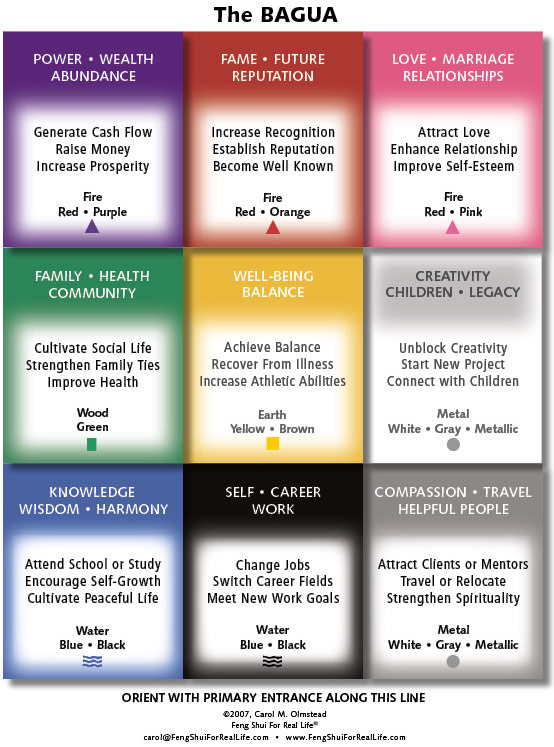
7. Accent your workspace with color. Choose accent colors to match the bagua areas of your workspace to enhance your career path. 
The Bagua
8. Add current photos. Display photos of mentors, family, and friends who support you. It’s okay to display photos of deceased relatives who were mentors, but balance these by also displaying current photos of you and/or your family to show continuing growth.

Dead people on my writing desk? No thanks! Talk about an inspiration killer… That’s what hallways and unused corners are for…

9. Lighten up your home office. Locate your desk as close to a window as possible, and choose full-spectrum or warm-glow bulbs that simulate daylight, rather than cold, blue-white bulbs. Avoid overhead fluorescents.

Eye strain, eyeball and temple headaches are a distraction and can be avoided with proper lighting. I love the full-spectrum bulbs; they’re sunlight in a lamp. No seasonal affective disorder with full-spectrum! And they last about six years so they’re extremely cost-effective, too.

10. Tune in to tune out distractions. Play music or use a white noise device or app in your office to drown out any distractions from inside or outside your home. This is a good time to rethink your playlist and choose more soothing sounds to balance any work-related chaos.

This one’s tough for me since I have the attention span of a squirrel. Thankfully I have several jazz apps on both phone and laptop. Soothing and allows me to focus on my work (like this post – I’m listening to KKJZ out of LA right now…).

#amwriting #fengshui #writingdesk #writersdigest #saturday #writersoninstagram #tribel

Getting Paid Writing Gigs – Can I Handle the Pressure?

Is it really this easy?

Can I Produce What They Want?

This very question came to me as I perused the media jobsite Mediabistro, just to see what they had to offer. I read job ads and descriptions, including a sidebar on each page as to what a Proofreader does, what’s expected from a Copywriter, etc.:

What does a Proofreader do?

A Proofreader is in charge of making sure work is reviewed before it goes to print. Proofreaders check documents for grammatical errors, along with looking at the body of work stylistically and making sure the margins and spacing is correct. While the job can overlap with an Editorial job, a proofreader mainly ensures that an article is free of grammatical errors. Ultimately, a proofreader works to make sure content is free of typographical, grammatical, spelling, punctuation, syntax, formatting and other such errors.

From Mediabistro.com

The job description of Proofreader fit me (and my inner Grammar Nazi) to a tee but the degrees required make me hesitate, make me question my abilities – can I provide what they need?

Each sidebar noted that a degree in English, Journalism or Communications was necessary. Is that true? Plenty of degrees require writing skills but I do wonder if I would receive consideration even though none of my degrees are in the requisite fields listed.  

What are the requirements to become a Proofreader?

Similar to the requirements for most Editorial roles, this person typically has a bachelor’s degree in English, Journalism, or Communications. This person must have a high threshold for tedious work as well because most of their work will be very specific last-minute edits that sometimes they only have the eye to see. Ultimately, this role requires impeccable attention to detail and grammar.

From Mediabistro.com

Sound the Death Knell

And there it is. The anxiety-producing, I-doubt-they’ll-even-consider-me-for-the-position willies. The sheer weight of fear of that level of responsibility crushes me, keeps me from moving in the direction of ever getting a paying writing gig. How does one get past this hurdle? If I’ve been writing articles for newsletters and journals for thirty years, how is it I still think of myself as not talented enough or good enough? I’ve written books, for crissakes. Certainly experience equals or trumps any degree, right?

Just Gimme a Chance!

Maybe all I need is that first gig, that first shot at proving to myself and the contractor that I can do it. I can write. I can proofread. I can meet your deadline. I can write a paragraph or 1000 words on a topic close to your heart.

There are thousands of magazines out there. If I could drum up the courage and send out some queries, I’m sure I’d find a few takers. I get so close – I start writing an article or informational piece. Next step is the query – this is where I get stuck. So many magazines and publications – where to begin? What are their submission guidelines? The impending confusion and overwhelm pulls me back into my shell. And there I sit, a writer unpaid and afraid to reach for something more.

I can’t be alone in this – this desire to prove that I’m good enough to be paid for the work product I know (on some level, anyway) I can create. Being insecure and a writer – they do tend to go together often, don’t they? Amazing that some writers accomplish anything at all.

I’m still working on that… 

AI Generators: The Alleged Violation of Artists/Creatives and How Your Work May Be Affected

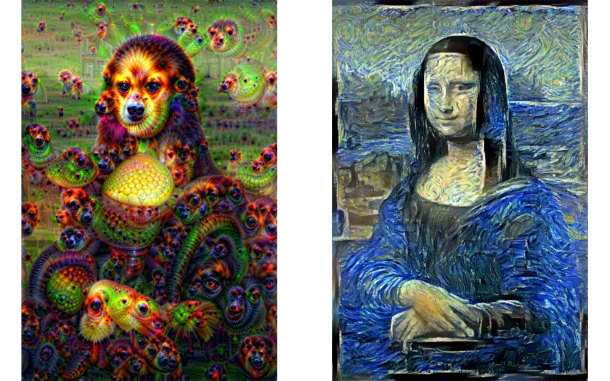
03-pjfinlay-deep-dream-and-neural-style-transfer-original (1)

Source: Google Images/”Mona Lisa” with DeepDream effect (left) and Neural Style Transfer (right) created by P.J. Finlay. Image: Wikipedia.

I couldn’t believe it when I came across several articles written on the alleged plagiarism and outright (copyright) theft of artists’ works by AI generators. All in the name of ‘open-source’ and ‘free access for the world.’ Apparently, AI systems “are being trained on vast amounts of copyrighted work with no con­sent, no credit, and no com­pen­sa­tion (Stable Diffusion Litigation, 2023).”

I’m not surprised – I saw it as an eventual situation once somebody (or, in this case, several somebodies) figured out how to copy the works of a multitude of artists, including famous artists, for the supposed intent to “teach” AI generators how to then create something new, something different and supposedly something not already copyrighted. AND make money off it.

Huh.

Getty Images and several well-known artists have filed a class-action lawsuit against companies Stable Diffusion, DeviantArt and Midjourney, claiming copyright violation:

“In a press statement shared with The Verge, the stock photo company said it believes that Stability AI “unlawfully copied and processed millions of images protected by copyright” to train its software and that Getty Images has “commenced legal proceedings in the High Court of Justice in London” against the firm.”  The Verge, January 17, 2023


Stable Diffusion is a 21st century artificial intelligence software product. It is part of a category of AI systems referred to as generative AI. It’s based on a process called diffusion, where the AI program is trained to ‘reconstruct’ (their word, not mine) images that it’s been fed. The program then supposedly creates new and original (?) images. Yeah, right.

According to an article on ArtNews:

“The plaintiffs claim that these copied images are then used to create “derivative works,” a work that it “incorporate[s] enough of the original work that it obviously stems from the original,” in the Cornell Law School’s Legal Information Institute’s definition. The image generators, according to the plaintiffs, are nothing but a “21st century collage tool” that has the potential to greatly damage artistic industries and was built off of protected works.” (Read it here.)

I have to admit that I have taken images off the internet  – usually from free sites like Pixabay but occasionally from Google Images – and re-mastered them by changing color, removing certain aspects… and then using them as a picture in my blog post. In other words, I don’t profit from the changed picture. These AI-generated works are a whole new ballgame and artists may be on the losing team if the lawsuit doesn’t set a precedent. 

Here’s food for thought: After Korean artist Kim Jung Gi died, someone used Stable Diffusion AI to “create a model” that would reproduce works in his style. I understand being a fan of certain artists – I love Vincent Van Gogh’s works but I would never, could never, copy his work and call it mine (except for the odd paint-by-numbers of his works that I’ve done since I can’t afford the originals).

Also according to ArtNews (and this is an important distinction, perhaps):

“First, only specific images, not styles, are protected by copyright. Meanwhile, collage is a protected medium under “Fair Use,” a legal doctrine that creates exceptions to copyright law  “for purposes such as criticism, comment, news reporting, teaching (including multiple copies for classroom use, scholarship, or research)” and “transformative” creative production. Whether or not the lawsuit accurately characterizes diffusion is also in question.”

This is a complex situation, without a doubt. Digital media and content lag far behind laws that might protect content creators like us. Will if affect your work? Do you think that the remixing of copyrighted works should be legal? Do you think it’s a copyright violation? (omg – stealing poor Van Gogh’s works is a TRAVESTY, in my opinion)

Perhaps only time will tell. We are heading into new and unfamiliar territories with AI and all if its capabilities (for good and bad). I fear we will reach a point where no work of art (paintings, novels, etc.) will be protected because AI experts will be able to take what they want and no one will be able to stop them.

I guess we’ll find out soon enough. In the meantime, PROTECT YOUR WORKS.


To read in full on this litigation/copyright issue:

Stable Diffusion Litigation

The Verge article

ArtNews article

#authors #writers #amwriting #aigenerators #stablediffusion #theverge #artnews #copyrights #contentcreators

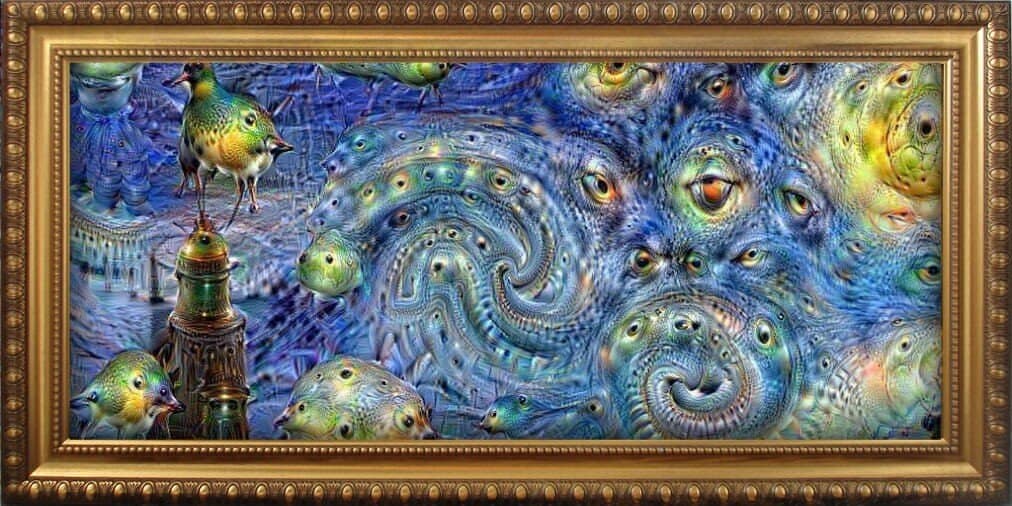
Van Goh remake

Source: Google Images/https://mpost.io/exploring-the-value-of-ai-generated-art/

A Year of Letting Go

letting go quote

Source: Google Images

2022 was a challenge for many; Covid-19 and its variants, housing difficulties, job and financial losses certainly have tested our proverbial mettle. Even I could not escape its most antagonistic grasp. I was forced, often to my chagrin, to face aspects (read: imperfections, failures) of my personality, relationships and life in general as I worked through some difficult and oft-repeating themes. In moments of overwhelm, I simply decided to let go. Why was I hanging on to people, places and things that no longer fed or supported me emotionally or spiritually?

The Great Escapes

At the onset of 2022, one of the first tasks was to walk away – no, ESCAPE from – a lousy job of 2.5 years. High stress, high turnover, low pay, filthy working conditions, etc. I had so many reasons for leaving but couldn’t muster the courage to take that leap of faith. Not only did I walk away but I managed to secure a long-term seasonal job with better pay, (much) lower stress, and a (much) smaller workforce (total of 7 of us in the office). I finalized my escape at the end of January 2022.

In the spring, I ESCAPED a living situation that had gone from slightly uncomfortable (two very different, occasionally opposing personalities) to over-controlling and immovable (on her part). As an Aries, I can tell you that the one thing you CANNOT do is trap, ensnare or corner us – we’ll lash out in some way. My way was to move out. End of story. (I stayed my course and am now living in a way I CHOOSE for myself. Can’t get anymore Arian than that!)

Eight of cups

Source: Avantika’s Astrohelp on Twitter

Mercury retrograde through May knocked me on my keister but I knew Jupiter in Aries was soon to follow so I hung in there best I could. I picked up another long-term temp gig with a company that has kept me working (most of the time) and at a much higher rate of pay than most jobs here.

Over the summer, I cleared out my storage unit of unwanted pieces of my life that were no longer useful. Done. Now I can breathe. Being tethered to less and less of the material world has helped free my spirit and has lightened my load in so many ways.

Hangin’ In There But Still Letting Go…

Indian summer/fall found me struggling with another Mercury retrograde (while Jupiter was still in Aries so it didn’t hit so hard) but still working. Then I got hit with a medical issue that brought me to the ER after much arguing with myself that it really wasn’t that serious. It wasn’t, turns out, but there was something else that was discovered in a follow-up appointment with my PCP. I was taken aback at first; for someone who’s always been a foodie (I love my veggies and fruit over junk food) and relatively healthy, this new diagnosis was a surprise, albeit a scary one – at first. Once the initial shock wore down, I did some research (I did have a medical license for some years, after all) and realized that I could do what was needed without having to make too many changes in my food choices or daily habits.

I decided to let go of the fear of the negative long-term possibilities and scheduled an appointment with a local talented Acupuncturist/Chinese herbalist. I’ve kept going and boy, what a difference! I’m constantly amazed (and disgusted) by the defeatist attitude so prevalent in Western medicine. They consider my situation nonreversible but that’s not true in Chinese medicine. It rarely is. If one is willing to make some changes in diet/lifestyle for the long term good, the outcome will no doubt be to your liking.

When It Comes to Family and Friends…

And then there’s family – or at least what’s left of it. With mine, sadly, there were some losses in 2022 but it’s my generation’s turn so not much to be done about that. Facing mortality is a fact of life, especially when you reach my age. (I find myself more and more pragmatic about it the closer to the other end I get. That’s good right? Acceptance?) Even old friends, long gone from my life (for not always the right reasons) and still on my mind had to go. I had to make space in my heart for the new in 2023.

What I’m referring to is the letting go of relationships or perceived relationships that I have been unwilling to sever, for lack of reciprocity. I’m not a hopeful romantic but I have spent far too many years ‘hoping’ that certain friends and family members would – how to say this – change the way they feel about me, the way they treat me. 

Not gonna happen.

In the wee hours of this very morning, I did a visualization: I conjured up images/faces of those particular family and old friends with a satin-like ribbon extending from their images to my body. I took a pair of scissors to each ribbon and, one by one, SNIP SNIP SNIP. What a release! What a nice way to close what has been a very challenging year (for so many, not just me)!

Once completed, I felt relief. Emotional freedom and the permission to go about my life as I choose. I don’t care anymore. I can’t. It’s been draining me for too long because I’ve received NOTHING in return. Some people just can’t be the people we envision, the people we need, the people we hope they can become. For whatever reason, they simply cannot or will not be what they could be. So I have to let them go.

In Elizabeth Gilbert’s movie Eat Pray Love, Richard from Texas (actor Richard Jenkins) tells Elizabeth (actress Julia Roberts): So miss him. Send him some love and light every time you think about him, then drop it.

Brilliant.

That’s what I’m gonna do. I will send them love and light when I think of them and then I’ll drop it. I’ll let go. So I can be free. To be me, warts and all.

HAPPY NEW YEAR!

#writersoninstagram #authorsontwitter #writersontwitter #authorsoninstagram #writing #blogging #lettinggo #eatpraylove #tarot #eightofcups #farewell2022 #happynewyear #2023 #amwriting #elizabethgilbert #freedom #independence

Happy Holidays to One and All

xmas1

Source: Google Images/Dollar Tree

I came across this poem many years ago. I don’t know who wrote it (if you do, please let me know). Each Christmas I’d print this out and stick a copy in each card I sent to family or friends. This year I share it with you, dear readers, in appreciation for your loyalty, comments and kinship.

May this holiday season be rich with good food, the warmth and comfort of family and/or friends, and maybe a nice snowfall!

The Christmas Card List

There is a list of folks I know

All written in a book,

And every year at Christmas time

I go and take a look.

And that is when I realize

Those names are all a part

Not of the book they’re written in,

but deep inside my heart.

For each name stands for someone

Who has touched my life sometime,

And in that meeting they’ve become

A special friend of mine.

I really feel that I’m composed

Of each remembered name,

And my life is so much better

Than it was before they came.

Once you’ve known that “someone”

All the years cannot erase

The memory of a pleasant word

Or of a friendly face.

So never think my Christmas cards

Are just a mere routine

Of names upon a list that are

Forgotten in between.

For when I send a Christmas card

That is addressed to you,

It is because you’re on the list

Of folks I’m indebted to.

And whether I have known you

For many years or a few,

The greatest gift the Universe can give

Is having friends like you.

#Christmas #Xmas #Holidays #friends #writersoninstagram #writersontwitter #author #amwriting #christmasgift #giving #Hannukah #Kwanza #friends #travel #Italy #wanderlust #newmexico #connecticut #massachusetts #california #oregon #washington #Instagram #Twitter #Tribel #Mastadon

Not Speechless But There Are Limits

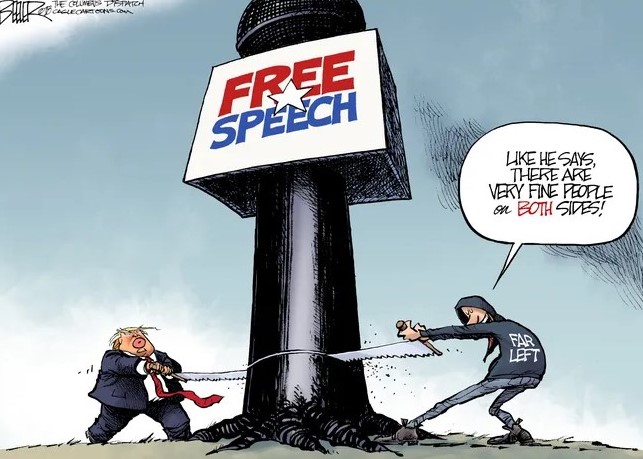
free speech1

Source: Google Images/Cartoon Movement (cartoonmovement.com)

In light of what’s been happening on Twitter and in the political arena, I thought it might be a good time to clarify what ‘free speech’ actually is – in case you didn’t already know. The internet and social media have become a haven for every lunatic with a not-so-informed opinion; violence, racism and various forms of hatred now clog up the digital highways. Hardly a day goes by when I’m not cleaning up, blocking or getting rid of unwanted ads and other attempts at sucking me in to a digital vortex of Never Never Land.

Ongoing attempts at regulation and censorship often butt up against protectors of free speech. I’m usually in the free speech camp but these days the negative and often violent rhetoric makes it difficult to defend our First Amendment in all its glory (and unintended or unseen disadvantages).

In Elonis v. United States, heard by the U.S. Supreme Court, is one such case. (If interested, you can read about it here.) The crux of it came down to which forms of expression are or are not protected by our First Amendment right to free speech. So many writers now live online via Goodreads, FB, Twitter, IG, and numerous other social media accounts because it’s how we stay in touch, learn from other writers, and connect with writers we may never even meet. Which makes it all that much more important to understand and acknowledge that ‘free speech’ is not as free as many believe.

“Congress shall make no law respecting an establishment of religion, or prohibiting the free exercise thereof; or abridging the freedom of speech, or of the press; or the right of the people peaceably to assemble, and to petition the Government for a redress of grievances.” First Amendment to the U.S. Bill of Rights

According to an article from Sidebar Saturdays author Matt Knight, “The right to free speech protects individuals from government censorship, including all government agencies and officials, whether federal, state, local, legislative, executive, or judicial. The government cannot fine, imprison, or slap you with civil liability for what you say except under certain circumstances.” 

In Reno v. ACLU, the Supreme Court extended free speech to the internet. But the constitutional right to free speech only restrains government not the private sector. Herein lies the rub: Private companies, including all the social media companies (Instagram, Twitter, etc.) are free to regulate speech. *deep sigh*

Granted, people are more disinhibited online when it comes to spewing whatever comes to mind each and every moment of the day (don’t these people have jobs? Families?). I’ve got news for ya – there are limits to our constitutionally-provided free speech and the following is a good explanation of those limits.

From Sidebar Saturdays, When Free Speech Meets Social Media (12/3/22):

Content-Related Restrictions — Most content-related speech is protected from government regulation, even vulgarity, hate speech, and blasphemy. But the government can suppress certain ideas and messages from a few narrow categories such as:

  • Obscenity – Most forms of obscenity fall within the freedom of speech. But if the obscenity reaches a high-test threshold, like hard-core, sexually explicit pornography, the speech is not protected. Companies like Facebook and Twitter also regulate outside boundaries like this on their platforms too.
  • Fighting words – The government can prohibit speech used to inflame another (like a personal insult) that is likely to lead to an immediate fight. This would include speech meant to incite violence and hatred, and encourage others to commit illegal acts. This would not include political statements that offend others and provoke them to violence — like anti-abortion protesters that provoke violence from their targets or church members yelling obscenities that provoked LGBT people to attack. It also doesn’t include hate speech, which means contemptible, bigoted speech is usually protected.
  • Defamation – False statements that damage a person’s reputation are not protected.
  • Child pornography – Speech that depicts a minor performing sexual acts or showing their privates is not protected free speech.
  • Crimes involving speech – Any speech used to commit a crime is not protected, e.g. perjury, blackmail, and harassment.
  • Incitement – Speech that is directed to incite or produce imminent lawless action, i.e. encourages others to engage in illegal activity, is not protected free speech. Incitement has been extended to cover repeatedly encouraging someone to commit suicide.
  • True threats – Threats to commit a crime are not protected free speech, but there must be mental intent to commit the crime. [My addition: this is called mens rea and one’s intent can be very difficult to prove.]
  • Copyrights and trademarks – Infringement of someone else’s copyright or trademark-protected content will not withstand a free speech defense.
  • Commercial speech – Most advertising is protected free speech, but things like false advertising are not and can be restricted by the government.

Content-Neutral Restrictions — The government can suppress speech when the restriction is done without regard to the content or message of the speech, e.g. regulating noise [law enforcement/disturbing the peace], protesters blocking traffic, or the use of obstructive signs.

Special Government Relationships — The government can suppress speech when a special relationship with the government exists. For example, speech by government employees can be restricted if it keeps the employee from doing their job (a police officer making racist statements, a public school teacher encouraging students to experiment with drugs or a CIA employee who releases classified information). The government as head of the military and prisons can regulate the speech of military officers and inmates.

So that’s your free-but-has-limits speech in a nutshell. Now go forth and protest freely, associate freely, believe in whatever ‘god’ you choose, but remember this: you can think whatever you want but be careful with your words. Remember, they have power, just not as much freedom as you once thought.

#FirstAmendment #freespeech #authorsoninstagram #writersoninstagram #twitter #amwriting #SidebarSaturdays #MestengoBooks #rights #BillofRights #USConstitution #censorship #democracy #goodreads #socialmedia #hatecrimes #stoptheviolence