Free Publicity: Exposure and Perhaps More

publicity

Expose Yourself (not in that  way…)

In early August, I wrote a blog on getting exposure for your work via trade journals. In continuing with this theme, Sandra Beckwith of Build Book Buzz recently followed her first blog on this subject with a second and just as informative blog on getting trade journal publicity. I admit, since my last post on this topic, I have not increased my trade journal exposure. But it’s probably due to the fact that I was a crime victim and have been focused on protecting my identity and life (update: so far, so good, but I still want my Curacao pen back).

Sandra is quick to point out that publicity is NOT advertising because you can’t buy it or control it. But it is free exposure (currently in my price range) and you do sort of have to throw caution to the wind and cross your fingers at the same time. She offers six great tips (plus two bonus tips for getting and responding to interview requests):

publicity2

A Good List of Suggestions

1) Review several journals and issues of those journals to find out what kind of content they use. Look for a ‘news brief’ section where book announcements can be added, or whether they utilize guest columnists. Do they review books? Maybe they’ll add yours to the list.

2) Check out the editorial calendar – you can find it online or request it from the editor. That way you’ll know what goes in the publication and when it goes out to the public.

3) Make a list of how you can contribute to the publication’s content. Personally, I’m not much of a list-maker so this one won’t get me far. I’ll know whether or not I want to write for a publication once I review its contents.

4) Find out who the contact person is for a specific topic/department (if applicable). Last thing you want to do is send an article to a person who doesn’t handle the section/topic you write about. Check the masthead (also called the impressum) for the necessary information.

5) Map out your strategy – this includes a press release or an offer to send a review copy (again, make sure you have the right contact person). In her article, Sandra offers a link for writing a press release.

6) And finally – send your pitch (okay, this is the one I need). If you’re pitching an article or guest column, make sure you know what they want (subjects) and what they use. Again, a cool link on how to email a press release to a journalist/editor.

Bear in mind that there is no guarantee from this endeavor; however, I’m willing to roll the dice and see how it plays out. I got lucky with one trade journal and perhaps I will again.

Sometimes you just need to be patient and build momentum.

#amwriting #writer #freelance #marketing #marketyourself #writersoninstagram

Writing as One Profit Center

will write for money

Multiple Profit Centers (MPCs) Increase Your Overall Potential

I was in the mood to read a book today so I snagged a book I’ve been working my way through from the bookshelf. I’ve mentioned this book before – Making a Living Without a Job by Barbara J. Winters (update: sadly, she passed away in Oct 2022 after a long illness). I’m in a bit of a pickle at the moment (I won’t bore you with the details but suffice it to say that my life will be turned upside down as of end of this month, which could turn good or bad).

I’ve been racking my brain on how to create more of what Barbara calls Multiple Profit Centers or MPCs. It’s her theory that by creating MPCs, you increase your potential for prosperity and a more balanced life. Each profit center/idea/ job/entrepreneurial adventure has its own rhythm; over time, you create a steady stream of income because while one or two MPCs may experience a lull in business, one or two other of your MPCs will be on the upswing and generate income.

She even mentions getting paid to write articles. Personally, I’ve not had much luck in this area (the getting paid part). In a previous blog, I wrote about getting exposure for your work via trade journals. In my experience, this type of exposure doesn’t pay (if it does, please let me know how – and now!). But I would enjoy writing articles for other publications; problem is, I’m not sure how to go about doing that (query advice anyone?). If any of you have had some success in this area, please share your experience and expertise so that we who have not yet tasted that kind of success can take a step closer.

A Quotable Quote

Something else in her book got me thinking – and it made perfect sense. This is from her chapter on creating MPCs and is a quote from author and former London Business School professor Charles Handy (she quotes him in her newsletters), who advocates developing MPCs:

“Think of it this way, ” he advises. “You will have a portfolio of work like an architect has, or like your stock portfolio, no prudent investor puts all his savings into one stock, and no sensible business goes after only one customer. Yet that’s what you’ve been doing with your work and talent all these years….Now is your chance to go ‘portfolio’: to diversify your interests and do some things for money, some because they interest you, some out of love or kindness, and some for the sheer hell of it. And, moreover, it’s your chance to flex your portfolio to leave you time for all those other things – for travel, for discovery, for golf, for dining.”

Wow.

Patience and Perseverance

That brought me back to one of my early blogs, Be Careful What You Wish For. I realized I have already created MPCs, except that they don’t (yet) pay the rent. I guess I need to come up with a few more MPCs to cover the downswing of the current ones. It’s just that I feel lost amid the millions of voices already out there clambering for everyone’s business. All I can come up with at the moment is that I (and you, too) need to find a way to STAND OUT by doing something DIFFERENT with my (and your) skill set. Only then can my writing become a Multiple Profit Center that truly pays and supports my no-more-nine-to-five lifestyle.

What’s your MPC

#blogging #barbarawinter #writer #author #mpcs #multipleprofitcenters #freelancer

Losing Your Mind on Social Media?

This morning I came across an interesting article in one of my LinkedIn Groups, Book Marketing (amidst so many others that are not – at least to me). The author, Kirsten Oliphant, writes about the overwhelm many of us experience these days with Social Media (SM) and how to choose which ones will work best for each of us. As I read the article, knots formed in my stomach. I admit I’m not tech-savvy in the world of SM and just reading about it gives me the willies. She makes a good point, though, at the beginning, about struggling with mastering SM and balancing the marketing we do there with finding time to write.

She provides three options: 1) Hire out (don’t know about you but I certainly can’t afford this option), 2) gripe and procrastinate (welcome to my world), and 3) master and manage (oh, here come the willies again). While she makes valid arguments for all three, I’m focused on the third, master and manage. If only I could learn, understand, and utilize at least a couple of SM to my advantage as a writer.

Good news: Kirsten provides a free resource guide describing many platforms in detail, so that even I, the un-savvy, can understand and utilize SM. She also provides sensible advice: choose one or two platforms you’re comfortable with and start with those. And maybe use only those, as she does advocate not going hog crazy and trying to be everywhere and everything on SM. This makes sense to me, as it allows for time to write (and work a full-time job since writing has not yet completely replaced the J-O-B lifestyle).

Still, I’ve not heard of some of the SM sites she mentions and I’m likely to stay with what’s familiar (Facebook, etc.). I’m toying with opening a Twitter account; have any of you found it to be useful for your published works? I’m just not a big fan of being “followed” by anyone, and evidently I have to follow others first for that to happen. And by nature I tend not to follow others – rather, I prefer to take my own, less-traveled road, so I don’t know if Twitter is right for me. Which means I need to read her booklet in more detail, because who knows what I may discover. Perhaps I’ll find a SM site that doesn’t overwhelm or confuse me; perhaps I’ll discover an inroad to a new marketing adventure. Regardless, I know I’ll learn something that can help me to the next step in the process, all the while not losing my mind over the there-are-too-many-options-to-choose-from menu of Social Media.

You can check out the full article here.

A Writer At a Loss for Words?

I haven’t written anything this past week – I’ve been at a loss for words. I got sidetracked by a personal incident. Early last week, my car was vandalized while on my morning hike. Evidently I had not hidden my bag (containing wallet, phone, etc.) behind the grocery bags as well as I’d thought; thieves threw a large rock through my car window and took my life. I’ve spent the last seven days trying to protect my identity from further damage. Only time will tell if I’m to be lucky.

When I had to fill out the Missing Property Report for police, I realized how little attention I’ve paid to the “little things” in my life – like what exactly was in that bag. It struck me that I (and probably many of you) go about each day in a certain state of blissful ignorance about some of the little details in life. Details deemed unimportant until they need to be recorded on a Missing Property Report and given a value that isn’t sentimental, like the worn leather key ring embossed with a silver Indian headdress  – bought at a small craft fair while on a motorcycle ride with a good friend, about twenty years ago. Gone. Or the pen I’d purchased on a trip to Curacao, covered in red leather and carved with a picture of their famous swinging bridge. Gone. Or the new spring green note pad for taking notes while on the road so I’d remember to do whatever needed doing when I got home. Gone.

I want my key ring back. And I really miss that pen. And damned if I can remember what I wrote in that notepad, to remember to do when I got home.

Turns out cell phone technology has its drawbacks, too. WhatsApp doesn’t transfer your contacts to a new number. So all of my international friends who did not supply me with their emails? Gone. And my contacts list of phone numbers? That’s gone, too, (or so I thought) because I had to change the number but luckily found a backup of contacts in my Lookout app – which doesn’t transfer contacts to a new number. I had to add them each manually. All two hundred of them. Notepad? All my mileage and book promo expenses from the last four months were on there and that doesn’t transfer either. Like the Six Million Dollar Man, I, too, will have to re-build (and if I could run like the Six Million Dollar Man, I would’ve caught the buggers as they sped away from the scene).

I’m actually taking this all in stride. I’m a little surprised that I have not had some sort of mental breakdown over it, though I admit I was tempted to let myself fall apart. No, I decided to forge ahead with renewed resilience, determined to find the thieves who tried to take my life from me (not that it’s much of one and I wouldn’t wish it on another person – except for maybe the idiot thieves who stole it from me, maybe they could do better with it).

So I’m thinking the lessons here are: 1) don’t bring my bag/purse with me in the car when I go on a morning hike (now I stick my new, smaller wallet in my fanny pack and take it with me), 2) live a smaller life with less tech-y toys and apps, and/or 3) let go of the past. Cherish the here and now, cherish what family and/or friends you gather around you (especially during a trying time as this), and keep cherished items OUT OF YOUR BAG/PURSE.

Hmmm….not at such a loss for words as I thought…wink emoji

A Feast of Words for Your Palette

I just finished reading a lovely little book titled “A Feast at the Beach” by Willaim Widmaier. In the book he shares childhood memories of his summers in Provence, France (what a terrible childhood he had) with his grandparents. What I enjoyed most was that he included some delicious, old-world, mouth-watering French recipes that his grandparents served in their cozy cottage in St. Tropez. The recipes made his story come more alive for me while I envisioned the smells, tastes, and colors of the delectable dishes. It’s the kind of book I’ve not read often but enjoy when I happen upon one. (This one was a freebie offered at a recent writer’s meetup, so of course I took advantage.)

Another book I discovered several years ago, titled “How to Cook a Dragon: Living, Loving, and Eating in China,” details the life and food adventures of a Japanese woman (who is also a journalist) living in China. It’s a poignant tale laced with the most scrumptious recipes for authentic Chinese cuisine not seen here in America, unless you’re Chinese and cook them at home. Aside from the food, the story is delightful and a highly recommended read.

I enjoy books like these because they bring together food, family, friends, and their stories. I love to eat good food, share it with family and friends, and write/tell stories. They are the parts of life that bind together families, friends, and occasionally strangers. Not to mention that the authors are generous enough to share fabulous recipes with the world – and I am more than happy to take what they have given and add them to my kitchen repertoire. Language, food, and family are fundamentally tied together and books like these remind me of that. Makes me want to plan a family picnic and have everyone bring a family recipe dish. 

The books I mentioned here also use language (names and ingredients of the recipes, conversations between characters in the books) as part of the story – in these cases, French and Mandarin respectively. Because I also love languages (and have studied/dabbled in several over the course of my life), I see how it connects food to culture and people. It has always fascinated me, the way culture/language develop around the various cuisines of the world. That’s why I like Anthony Bourdain’s shows (on CNN) – he connects food with people and their cultures, and makes the food seem all that much more delicious.

Do you have a story to share where food is the centerpiece? I started writing a draft for a cookbook/family photo album years ago and it’s still a work in progress. But I love that every time I work on it, I’m taken down memory lane and get to re-live so many of the delicious made-from-scratch recipes I grew up eating. If you have a story like that to tell, don’t keep it to yourself, share it. Share it and let the world revel in the smells, tastes, and colors of your life story.


Showcase Your Work: Trade Journals

JCM current issue photo

A Good Trade-Off

I don’t know about you, but I’m overwhelmed by all the internet options for marketing books. Where to begin? Which to choose? How much to spend? On a weekly basis, I scour newly discovered sites hour after hour, page by page…then I’m back to feeling overwhelmed, because there are far too many options. I’m driving myself crazy with agida (see this  post) while trying to keep track of all the marketing options and whether or not they’ll work for me.

Then a book blog I subscribe to sent an interesting post this week on marketing our work in, of all places, trade journals. What a great idea! idea light bulb

Lightbulb Moment

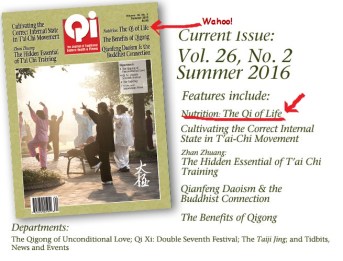
Why didn’t I think of that before? Oh, wait…I have…at least once…which is why my work (actually, an excerpt of my nutrition book) is currently published in Qi Journal magazine. Based on the blog’s suggestions, I opened my ‘ideas notebook’ titled “The best way to get something done is to begin” and started making a list of trade publications in my field. Why didn’t I think of this before? 

Qi Journal Summer 2016

All too often, I get caught up with and excited by the new opportunity and forget to continue down that same road to increase my chances of success. Do any of you experience this? You know, the can’t-see-the-forest-for-the-trees kind of thinking? Or maybe the internet is finally frying my gray cells to the point of no return from all the TMI (too much information)…

I’m Workin’ On It…

My trade journal list is a work in progress; I have to do a bit more research but am hopeful of the success I will have, based on my good luck with Qi Journal. When their Summer issue came out, a fellow acupuncturist contacted and informed me that she loved the article/excerpt and purchased a copy of my book. It was the validation (from a professional colleague) I sought for work well done. And it has provided the confidence to submit my work to other journals in my profession.

If you don’t have a ‘profession’ to speak of, don’t be afraid to send your work to trade publications that are related to your subject matter, whether it’s fiction or nonfiction. Take a chance on an area where your target market is already defined – and ripe for the picking.

#tradejournals #amwriting #Tuesdaytips #writersoninstagram #blogging

You Have Too Many Adverbs, We Need To Operate ASAP

A funny, enlightening view of one of my less-than-desirable writing skills (and many others’, I’m sure). Read on…

P. S. Hoffman's avatarP. S. Hoffman

Yesterday, I went to the Doctor’s to have my brain tested. She came into the room, staring at her charts, shaking her head.

“P.S. Hoffman, I’m afraid I have some bad news.”

“What is it? What’s wrong with me?”

View original post 502 more words

Subliminal Messages and The Call of the Word

maxresdefault

Source: Google Images

Stories Have a Mind of Their Own

Do you notice how your writing takes on a life of its own once a project is started? Do you wonder how you got started on it to begin with? I only recently realized that happened to me. After completing the grueling self-publishing process of my nutrition book (Agida/Agita No More), I thought about writing another  book on Chinese dietary therapy, detailing how foods can heal specific Western diseases. Then I summarily dismissed it. I was exhausted mentally and felt I did not have it left in me to start another painstaking journey down the nonfiction road. 

So Many Questions!

Everywhere I went, people asked me, “How do you treat disease X, Y, Z?” when I talked about/marketed my book. I wondered if perhaps it would make sense to write a companion book, to clarify how to eat to heal Western diseases from an Eastern perspective. Once again, I quickly dismissed the idea and bristled at the thought of going through that process again. Something nagged at me – it happens to a lot of writers, I will assume – and ideas formed in my mind about how I could actually write the book that so many seem to have hinted they needed.

Hint Hint Nudge Nudge

As I write this blog entry, I’ve already completed chapters one and two of the new nutrition book and am now working on chapter three. So much for avoiding agida. But the call from so many turned out to be a subliminal message that I finally heard (okay, so I’m a little slow on the uptake). I have found this book a bit easier to write since I’m keeping the formatting style from the first book. That means all I have to do is plug in the information, as some of the information is repeated from the first book. I love the copy/paste function! 

It was a great release to finally get the myriad rambling ideas out of my head and onto paper (though more continue to take shape since I’ve made room up there). Subliminal or not, it has occurred to me that, simply put, writers must write. Regardless of the subject, we must give in to ‘the call of the word’. 

My advice: Pay attention to the hidden messages all around you. Let them be your muse, let them inspire you to answer your ‘call of the word.’

#writer #author #publish #selfpublishing

Tips to Boost Your Blog

This is a good article so I thought I’d share it with you…have to click on the link to read the whole article, as there is no Share button.

70 quick tips that will boost your author blog


Our guest blogger today is Federica Auletta, a communications assistant at
Market Inspector, a business-to-business digital marketplace for businesses and institutions in Europe. The company makes it possible for businesses to compare quotes and offers from different suppliers. The article and helpful infographic that follows provide useful information for author bloggers with a wide range of experience. 

70 quick tips that will boost your author blog

By Federica Auletta

Any author can blog, but only a lucky few are successful at it. As a matter of fact, there are hundreds of millions of blogs available on the web, but the majority of internauts know only about a handful.

With that in mind, you might wonder how some bloggers drive tons of traffic to the blog on their website. Market Inspector has created an infographic (below) with 70 proven tips to help authors like you start or promote a successful blog on your site.

1. Search engine optimization – SEO

There are likely several key factors that influence a website’s search result rankings. No one is fully aware of how browsers classify pages, since these algorithms are kept a secret.

What is certain, though, is that some criteria have been identified: blog updates, the use of links, content relevancy, spam level, and domain authority are just some of the specifics that help optimize a page.

2. Attitude

Even behind a monitor, a personal approach always matters. The first rule for effective blogging is commitment. Perseverance and expertise are keywords when it comes to starting or managing a blog.

It’s important that the blog page is updated with unique content at least once a week. You want readers to anticipate your posts, so the only way to gain more traffic, better visibility, and returning visitors is to be a consistent blogger.

Read it all here

Success and Failure: The Yang and Yin of Writing (& Life)

I’m more than a bit of a fatalist. I start each day at my computer by checking a particular set of websites: my blog (Mestengo Books), my (former) Fan pages (ROWT, 5 Element Nutrition – both defunct since Zuckerberg shut me down without explanation in 2021), and my (former) LinkedIn page. Before I do all that, I check my “fate” for the day at ifate – I leave it up to the Universe as to which type of fortune-telling card shows up (I-Ching or Tarot). Today, it was an I-Ching reading that I found relevant and is my lesson for the next twenty-four hours: Hexagram 47 (this link provides a fuller explanation).

In summary, the lesson of Hexagram 47 for today is about oppression and hope – that even during difficult or bad times we must dig down deep, not fear failure (the inevitable downswing of the life/writing-cycle), quietly embrace it, and carry on with the understanding (hope) that all will be better again (the inevitable upswing of the life/writing-cycle). Does that sound like your life or your writing? It certainly does mine. 

It got me to thinking – since I’m licensed in Chinese medicine and I see the world through the lens of Yin/Yang relationships (Universal Law of Unity of Opposites) – that oppression, defined in the hexagram as “a form of troublesome worries,” is a kind of Yin/failure that sooner or later will turn into Yang/success in the cycle of life/writing. Some days the words flow, other days they don’t. Today I struggle with finding the right words for this blog while I wrestle with a work-related decision that must be made. I can’t wait for that upswing…

I’ve also been struggling with marketing my new nutrition book (due mainly to budget constraints and lack of marketing acumen) and am looking at non-mainstream options. I know it won’t be a NY Times bestseller and I’m okay with that – it’s not what I really want anyway, because it’s not where I fit. It’s been a slow climb. Recently, however, I’ve had the good fortune to be published in Qi Journal, a wonderful publication highlighting Tai Chi, Qi Gong, Chinese medicine, martial arts and Chinese culture in general. As a result, sales of my book increased. And I’ve been invited to publish with them again (and possibly ongoing). It was a chance email I’d sent to them inquiring about writing an article because I was looking for different avenues for book marketing and ended up with the opportunity to publish a portion of my book. Talk about Yin moving into Yang!

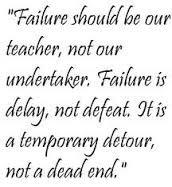
Failure  happens to everyone. It’s how you handle the failure. Ride it out, like a big bump in the road and you’ll come out the other side wiser, and perhaps, more successful. In whatever way that means for you.

failure should be our teacher

Evoke, Awaken, and Enlighten with Your Writin’

enlightenment art

A Bright Idea

The inspiration for this blog came to me as I hungrily devoured the middle chapters of The Girl Who Sang to the Buffalo by Kent Nerburn. This is the third in a trilogy of books he has written at the request of an American Indian elder named Dan (not his true name but Ken keeps it from us for good reason). It’s been some time since I’ve been so moved (emotionally and spiritually) by a story told by an exemplary storyteller. I realized that whether we write fiction or nonfiction, it’s important to captivate your readers and leave them wanting more.

Evocative Must-Reads

In the first book of the trilogy, Neither Wolf Nor Dog: On Forgotten Roads with an Indian Elder, Kent beautifully details his trips to the Northern Plains region to meet with the Indian elder. I’ve never been there but I can clearly picture the landscape, thanks to his exceptional descriptive writing style; it’s as if I were there with him every step of the way, emotionally and physically. He continued to mesmerize me in the second book, The Wolf at Twilight: An Indian Elder’s Journey Through a Land of Ghost and Shadows, where his adventures into Indian country continue, and so does his brilliant narrative.

This one particular paragraph from the first book spoke volumes to me:

Because of this, I saw something else in that roadside enclosure. I saw a piece of the earth – a huge and silent rock – enclosed in a pen like an animal. I saw the living belief of a people reduced to a placard and made into a roadside curiosity designed for the intellectual consumption of a well-meaning American public. In short, I saw one of the most poignant metaphors for the plight of the Indian people that I am likely to confront in my entire life; the spirit of the land, the spirit of the people, named, framed, and incarcerated inside a fence.

Isn’t that what it’s all about for us writers? To evoke images, awaken a sense of imagination, belonging, or participation in the story, and enlighten us in a way that transforms? It’s what I try to do but whether or not I succeed is purely the opinion of my readers. Yet I keep on writing with the hope that some of my work – be it fiction or not – will take the reader on a ride to a land or place or dream they’ve not before been. And want to go again.

#imagine #create #write #blog #nativeamerican #kentnerburn

Armchair Experts and Me

More thoughts on conscious writing:

What can I say, I’m on a roll….

I’m on LinkedIn and so are a lot of other people. A LOT. Probably explains why the few groups I joined  seem to be brimming with what I call “armchair experts” (any more than that seems a waste of time and TMI for me). Don’t misunderstand, some (perhaps many, I haven’t taken a poll) are successful with their work. But many (or perhaps some, I still haven’t taken a poll) are not – but think they should be, based on their expertise. (And why haven’t I heard of these experts?)

One of the groups  – Book Marketing – sends me a weekly digest of (too many) topics being discussed. I’m amazed (and often overwhelmed) by the varying opinions (remember, we’re all experts on our opinions) on how to market one’s work, publish to the masses, find that secret to getting the world to recognize our work, etc. Sometimes the advice seems ridiculous, sometimes it helps. Mostly you have to “read and weed” through the junk to find the proverbial needle in the haystack that will help advance your writing/work. 

One of my top pet peeves is (and has always been) people who talk like they know when they don’t. I refer to them as “armchair experts (AE).” Here in the U.S., the number of AEs appears to have grown exponentially with the advent of social media sites. Or is it my overactive imagination, mixed with a pinch of cynicism and a dash of arrogance? With so many of these AEs online, it seems they have solutions to my problems – both personal and professional. In my (expert) opinion, there is a lot of preaching about what one “should do” but how many are asking “Do you want my advice?” in the first place?  I’m reminded of a poem of sorts I have stashed away somewhere in storage, on the definition of a friend, and this is one piece from it: a true friend is someone who does not give advice without your request.

That’s called preaching.

One definition of preaching (as a verb and in secular text) is “to do this in an obtrusive or tedious way.” So i looked up obtrusive (an adjective, for context): “having or showing a disposition to obtrude, as by imposing oneself or one’s opinions on others.” (I added all the italics.) How many people start their sentences (verbal or written) with some form of “you should…”? The moment I hear that sentence, the tone in the voice, and watch the body language, I think – uh, oh, here it comes. The preach. The “I-know-just-what-you-need-though-you-didn’t-ask-me” monologue. No faster way to get me to leave the table, the room, or the website/blog. If you haven’t taken the time to ask (then truly listen), then you don’t know what I need (or want). You can’t assume I want to hear what you have to say, no matter how wise or beneficial your words may be. Let me first ask.

It’s rather like a famous diet (yes, more conscious eating metaphors) – The Paleo Diet, The Virgin Diet, The South Beach Diet, and on, and on… As with these famous “diets,” some of us will succeed in following the diet, others will not. And some will find the courage to take our own roads with our writing and learn the accompanying lessons, since it’s about the journey, not the destination, after all.

Any thoughts? (Yes, I’m asking…hee hee)

Goodreads Book Giveaway

Book Giveaway For The 5-Element Guide to Healing with Whole Foods

The 5-Element Guide to Healing with Whole Foods by L Ac Denise Thunderhawk

The 5-Element Guide to Healing with Whole Foods

  • by L Ac Denise Thunderhawk

    Release date: Apr 21, 2016
     

    Enter a chance to win one of five signed copies of a popular nutrition book!


    What Will Your Next Meal Be?

    Obesity rates have soared, bringing with it …more


    Opens for entries on June 23, 2016

    Availability: 5 copies available

    Giveaway dates: Jun 23 – Jul 23, 2016

    Countries available: US

    Format: Print Book

Conscious Writing as Important as Conscious Eating

the writing process2small

Conscious Writing – the must-have recipe for success

On the (now defunct, thanks to Meta Zuckerberg) Fan page for my nutrition book, I posted a blog on conscious eating. In writing that blog, an idea formed in my mind that we, as writers, must also write consciously. Not that we’re sleeping while we write, mind you; it’s more about being present, relevant, and aware of our work in quality and quantity. We’re all so busy racing to Twitter, to post to Pinterest, Google+ and too many other online venues to get our work noticed that we each lose something along the way. Much of our vocabulary has changed to a texting-style spelling (you, too is now u2, and so on) to save time and in the process, some have lost the ability to express thoughts and ideas clearly. Hence the concept of ‘conscious writing.’

A food recipe lists the ingredients, the quantity of each ingredient, and how many people it will serve. Conscious writing is no different. Your main topic is the recipe and each point you make to support your topic is one of the ingredients. Once all the points are covered, you have a recipe for a complete article/book/blog. As for how many people it will serve, that will depend on your ability to market your writing – be it a blog, a book, etc. Also, the quality of the recipe/story needs to be relevant and interesting. Don’t forget about good grammar and spelling (as they too, have all but disappeared from many a blog/article) – use spell check and thesaurus religiously to weed out homonyms and incomplete or run-on sentences. (In other words, get out of the habit of writing as you speak.)

In a recent blog on Puttylike, a website for self-described “multipotentialites,” I read an article (several times already today) titled, “I saw it as the one defining principle of my life that kept me from achieving greatness.” It’s a must-read for anyone out there who’s not sure where they fit in the bigger scheme of things, especially in the world of writing.

That being said, I’d like to add my opinion (remember, I’m an expert on it) that the more varied a life we live, the more interesting our writing will be, since we have a wider range of subject matter from which to choose. Unlike all those so-called experts who spend their adult lives specializing in only ONE area of interest and are unable to see how their expertise is connected to many other areas, our recipes/stories are both unique and relevant.

And hopefully conscious.

Conscious Marketing

And it dawned on me that marketing, advertising and PR are a part of that recipe, the conscious writing process. How can I give my work to the world if I don’t know how to package it? What are the ingredients (a dash of marketing, a sprinkle of advertising, and two tablespoons of PR) that make up a good dish/story? It’s different for each of us. Every now and then, someone shares a few unique approaches/recipes for success. In her blog, Build Book Buzz, Sandra Beckwith shares with her readers a wonderful little success story about how one woman came up with some different ways to sell herself and her book. You can read about her unique approaches here.

I met with a friend on Tuesday to brainstorm and he told me about a friend of his who wanted to get her book into Barnes and Noble. So what did she do? Did she take the traditional route of hawking her wares to the book buyers? Not even close. She simply walked into a local B&N store and left a copy of her book on a shelf. Then, when someone went to buy the book, they couldn’t because it wasn’t in the system. The clerk had to add the book to the system and they had to buy copies, since there was a demand.

Talk about conscious marketing!

#amwriting #authorsoninstagram #writersoninstagram #poetry #grammar #spelling

Famous Book Translated to Indigenous Languages

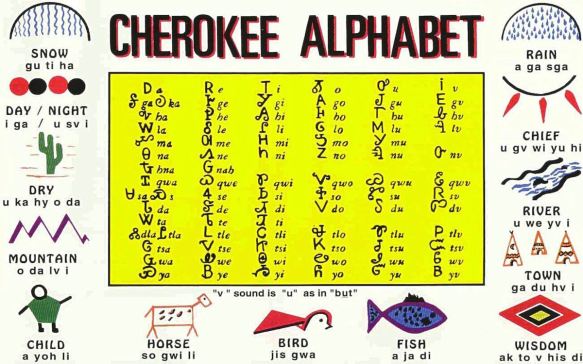
Cherokee_language_alphabet_Mango_Languages

Source: Google Images/Mango Languages Blog

This does my heart good – to see mainstream, classical literature help break down the barriers between the red and white worlds of this land…

From Indian Country Today:

‘CHARLOTTE’S WEB’ IN NATIVE TRANSLATION

E.B. White’s classic children’s tale Charlotte’s Web has been translated into Tsalagi and Cherokee syllabery. The translator, Myrtle Driver Johnson, is a Beloved Woman of the Eastern Band of the Cherokee who grew up on a farm in North Carolina’s Big Cove Community not unlike the farm that White owned in Maine. The book will be limited to a run of 201 copies; one will go to the White estate and the other 200 will be used by students at the New Kituwah Academy.

#indiancountry #cherokee #language #writers #charlottesweb