Learn From Your Book Reviews

Hi all, I’ve been out of touch the past couple weeks – no excuse, really, just no desire to sit and write another blog on writing. I mean, how many topics can there actually be? Yet here I am, with another blog…

So I’m going to cheat a little and let Sandra Beckwith, owner of Build Book Buzz, share some neat tidbits on how we can all learn from negative or not-all-that-nice reviews of our work. I’ve been lucky so far; all my reviews are 5-star – then again, I only have THREE of them for my fiction novel. I’ve asked people to say something nice when they finish reading the book, but they do seem to forget or get distracted elsewhere. 

I’ve never written a negative review; if I can’t say something constructive, why bother? Then again, perhaps some positive critiquing is necessary from time to time, as we often can’t see the weak spots in our work as easily as the reader. So don’t take it personally. Use it to your advantage, as an opportunity learn where you may have missed something – with characters, dialog, or scenes/chapters – and go back to the original work with fresh eyes.

Why Authors Shouldn’t Obsess Over One-Star Reviews

Authors, prepare yourself for the inevitable one-star review. In the publishing industry, one-star reviews are practically a rite of passage.

And no one is immune. Whether you’ve got 10 best-sellers to your credit or it’s your first book, you can expect at least a single one-star review.

There are the one-star Amazon reviews that make you roll your eyes.

“If possible, I’d give this pile of garbage zero stars.”

“Not really of much use for me. Seems like just a lot of useless information to fill up a book.”

“The best part of this book is the cover photo.”
https://buildbookbuzz.com/one-star-reviews/

Grammar, It Ain’t That Hard, Right?

good grammar

Is Grammar Dead?

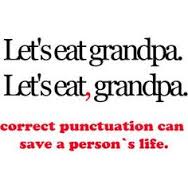
Read any number of internet articles, including those written by journalists and professional writers, and you just might think so. In a previous article, I criticized the overuse of the word thing. It is supplemented far too often as a noun where a more respectable and appropriate noun would do.

Grammar clarifies both our writing and our thinking. They are forever joined together; the more clear and precise our thinking, the more clear and precise our writing. Hence, a better story or article is the result of that positive relationship. The lazier our thinking is, logic dictates, then the more muddled our writing is. As writers, we want to inform and/or entertain our readers, so doesn’t it make sense to keep our words as precise and concise as possible?

Memories…

I was (un)fortunate enough to have been sent to a private Catholic grammar school for eight (long) years. I have vivid memories of nuns with their rulers and clackers, kept at the ready for any expression of unacceptable behavior, including mistakes in grammar when called upon to read (yes, out loud) or conjugate (yes, out loud).

The following is an excerpt from a funny and informative grammar book, Who’s (…Oops!) Whose Grammar Book Is This Anyway? by C. Edward Good. The scene is eerily familiar to me (my comments are in parentheses):

“Up front, under the watchful eye of Miss Hamrick – our no-nonsense English teacher – Billy Wombie tries to diagram a sentence on the chalkboard. Momentarily uncertain where to put the prepositional phrase, he regains his composure and finishes with a flourish, smirking at Damron, the troublemaker in back taking aim with spit was in cafeteria straw.

Miss Hamrick spots him. “Up front with you, Damron. On your feet. In front of the class.” (I have similar embarrassing memories.)

“All right, Damron. Now perhaps you can help the class with verb conjugation.”

“Yes, ma’am,” Damron dutifully responds.

“Good. Now conjugate the verb to ride in the third person.” (How many of you have done this or can do this now?)

Third person?” Damron groans. He knows what will come. (I’m groaning, too, I’ve been here.)

“Third person. That’s right, Damron. No go ahead.”

“He rides, he rode, he will ride…”

“Damron, be fair. Include all third persons.” (Still following?)

“He/she rides…”

“No, Damron. Don’t forget to include it.” (Sheesh. You getting this?)

Beads of sweat forming on his troubled brow, Damron begins, “He/she/it rides, he/she/it rode….”

The class erupts, delighting in Damron’s pronunciational discomfort.

“He/she/it rides, he/she/it rode, he/she/it will ride, he/she/it has ridden, he/she/it had ridden, he/she/it will have ridden.” (I still don’t know how to use all but the first three; better read more of the book.)

“Very good, Damron. Now the progressive tenses.” (Huh? Don’t remember those…)

“He/she/it is riding, he/she/it was riding, he/she/it will be riding, he/she/it has been riding, he/she/it had been riding, he/she/it will have been riding.” (I give up.)

Grammar, a forgotten relic of the past? Nowadays, schools aren’t offering it in their English classes. Why not? As you can see above, it’s vital to understand the tenses and which one to use. I, for one, will be reading more of this delightful book so I can be more like Miss Hamrick.

Sheesh.

#amwriting #grammar #ginger #grammarly #writing #writersoninstagram #journalism

Walking & Writing Down Memory Lane

As I continue to unpack my life in my new home (hey, the older we get, the longer the process takes, wink wink), I discovered some long-forgotten gems I’d packed away. A friend is bringing by a TV with stand later today, so I had to make room. There were still two containers, one packed with Christmas decorations and the other marked “Memorabilia” that I needed to either put away or go through and discard unwanted items. I stored the Christmas box in the storage closet then set about rifling through the box packed with memories of my past. 

That container walked me through parts of my life I’d long forgotten, including many of the papers I’d written while earning my Psych degree back in the late 90s. I chuckled and snorted my way through the papers – Philosophy – the life of Socrates; English 202 term papers; and several of my clinical psych papers on serial killers (their psychopathology and crime scenes). At the bottom, tucked in an old scrapbook, I discovered some poems and short stories I’d written as a teenager. Seems I’ve been writing for longer than I remember. I stacked those papers in a neat pile to scan into my computer at some point. I enjoyed reading them again, to see how much I have and have not changed over the decades.

Strong memories flooded my mind. In particular, my favorite professor, the late Dr. Eugene Policelli. This man was not only a brilliant professor and writer; I clearly remember he was also fluent in Italian and, of all languages, Latin. We’re talking old school here. But his exuberance, kindness, generosity, and gentle guidance were what I remember most of him and his writing assignments. Because of him, I wrote some damned good stories. One of which he liked so much that he told me to “tighten it up” (I wasn’t sure what he meant by that at the time) so he could have it printed in our local paper (he had a friend who worked as an editor or something there). I remember it was a Christmas story of my family. Then I came across handouts he’d given us on the writing process.

I also discovered a booklet printed upon my graduation from high school and, there among my classmates/poets, was one of my very own poems. I’d completely forgotten about that booklet and writing the poem. I realized some of my emotions and perceptions have remain unchanged by time.

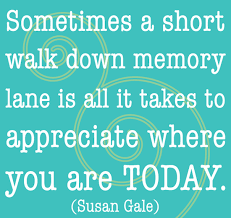
We take many turns along the road of life but in looking back we can see patterns emerge that shape who we are or will be at any moment in time. I realized this morning that I have been a writer for most of my life and the need to express myself is part of who I am, memories and all.

memory-lane-quote

The Christmas Card List

I’ve had this poem on my laptop(s) for years. I can’t remember where I found it or even who wrote it, but it’s my favorite  way to tell family and friends what they mean to me. My apology to the author for not properly crediting him/her. If anyone knows who wrote this, please let me know. In the meantime, feel free to share this with your family and friends. I like to print it out on slips of paper and tuck it into Xmas cards. This year I simply emailed it to everyone to ensure timely receipt. (I love to send cards as they’re more personal, but the past several months have been a difficult time for me and I wanted to make sure I didn’t forget anyone.)

the-christmas-card-list

Merry Wishes for a Bright and Loving Holiday Season

mistletoe

Lay Your Past to Rest

I’m a Tarot fan and I check my reading daily. Today I got the Judgment card. With Fire as its ruling element, Judgement is about rebirth and resurrection, and laying the past to rest. It got me thinking, as cards like this usually do. Along with the usual emotional basement of hidden/repressed childhood experiences I’ve yet to resolve, I find myself pondering the mystery of my unfinished works. Should I finish them or move on? There seem to be many starts but few completions. I desire to finish them but I don’t. Do you have the same experience? What would you do in this situation?

I particularly liked this part of the reading:

“There is no way to leave the past behind. Each step wears down the shoe just a bit, and so shapes the next step you take, and the next and the next. Your past is always under your feet. You cannot hide from it, run from it, or rid yourself of it. But you can call it up, and come to terms with it. Are you willing to do that?” Aeclectic Tarot

So each book I write shapes the next book I write? I suppose I could apply it that way. I’ve ignored my writing for some time now; working two jobs leaves little time or energy for tapping the imagination or doing the nonfiction research. But this message is more about making the conscious decision, and having the courage, to let go of whatever is not working. And that includes any unfinished writing. Perhaps unfinished work is meant to be an exercise, a way to stretch my mind and sharpen my writing skills. Perhaps it’s a way to find my voice, a way to come to terms with who I am as a writer and storyteller. Am I willing to let go? Only time will tell.

In the end, it will be best to lay some of it to rest, and focus on what is most likely to flourish and allow me to grow as a writer. I wish the same for you.

Happy Holidays

 mistletoe


Writers: Do You Podcast?

Podcasting is Popular Now

Are you a writer? Do you podcast? Have you been considering doing a podcast? Have you considered doing a podcast on your writing? I could go on with these questions. For some time now, I’ve been considering doing a podcast. But every time I look into it, I become overwhelmed by all the technical aspects (due to the fact that I’m NOT the least bit tech-savvy).

The whole process of putting together (producing) a podcast, uploading the podcast to a hosting site, making it available to Social Media (Facebook, Twitter, etc.), learning Audacity or Garageband (Macs only)…gives me the willies. I’ve been told more than once I should be speaking to audiences and I admit I feel very comfortable talking into a mic. But the thought of me having to do ALL of it without a producer or at least a friend with some broadcasting know-how seems a hurdle too huge to jump at the moment. But the urge grows within me.

Currently (as of this posting), an average of 1 BILLION (that’s right) people listen to podcasts, and roughly 47% of Americans listen to radio, according to Edison Research and Triton Digital statistics. Think about it; we have the whole world at our disposal if we can find the right stories to tell, find the right niche to fill. That’s the tricky part, I imagine. With millions already podcasting out there (and the numbers grow each year), how to not be the veritable needle in the haystack with your message? I suppose it all goes back to the same process we go through with our writing and the marketing of our books.

A Few Good Suggestions

I Googled podcasting sites and a here’s a short list of some good ones: Podbean, Libsyn, Buzzsprout (like this one, too), Podomatic, Sound Cloud, Conclusion, and Archive.Org. Podbean wants $200 per month to let you monetize your podcast (in other words, ask for a ‘donation’ so you can afford to keep producing shows); that seems a bit steep for my taste so I’m looking elsewhere for an affordable option.

Buzzsprout has a page, How to Make a Podcast, where they literally walk you through every step of putting together a podcast and it’s jam-packed with good information. For writers unsure of which topics to cover in their podcasts, here are two of several suggestions from the same page:

  • Repurpose Your Blog Content Are you a blogger? Finding a great podcast ideas is as close as your blog. Take your readers’ favorite posts, add extra content, and *presto* it’s a podcast. Bonus: you’ve already tested this content and know it matches your demographic’s interests.

  • Recreate Popular Content With Your Spin Even if you don’t have a blog, you can use a similar strategy. What is your target audience reading and listening to? Improve it! See lots of complaints on popular posts? Create a podcast that provides the missing pieces.

This is the year I may take the leap from writing blogs on writing (and other topics) to recording podcasts discussing a variety of topics (social, environmental, and economic issues) that will hopefully cause folks to think more critically. I miss dialectic and want to create a podcast where I invite intelligent discussion, discourse, and argument. And in the process, perhaps, create a small revolution (change) in the way we perceive this world and our places in it. 

#podcasting #applepodcasts #writers #onair #author

Writing From the Heart

write-from-the-heart-logo

Change Is the Only Constant in My Life…

In recent posts I have alluded to a big change in my life coming this week. The time is nigh and I find myself in a quandary, which is why I’m late with my weekly post. Because I’m about to go through something that will (once again) turn my life upside-down for a bit (which could be good or bad, I just don’t know yet), I decided to share an excerpt of my personal memoir, written many years ago. It was written on the heels of both the 9/11 tragedy (I was working in NYC before, during, and after this life-altering day) and my mother’s death from cancer. The experience nearly wrenched my heart from me (emotionally and spiritually, anyway) and I find myself, once again, in a similar situation. The book, as it turns out, was a cathartic exercise for me, thus my title for this week’s post.

I would never accuse any writer of not writing from the heart; but I think the writing is different when the heart hurts in some way. Perhaps the catharsis of writing it down on paper helps. I’ve struggled with my writing this week (actually I’ve avoided it altogether). The words seem stuck in a nether world and I’m unable to retrieve them, as the pain is blocking my “juice,” which I wrote about in my last post.

Here it is then:

“As I move through writing about a difficult phase in my life, I spend a good amount of time thinking about universal energies. What lesson was I not learning that the universe brought me to the brink and forced me to look over the edge? I read a column in a local newspaper discussing this very subject. It seemed fitting because I’ve had a bit of writer’s block off and on lately.

I believe there is no such thing as a coincidence. The universe has its own way of letting us in on the lesson/s to be learned in its own good time. One lesson I have learned: part of the reason I ended up losing so much was that the universal energies were telling me it was time to go, time to let go, and to rebuild, and move on, even though I felt I wasn’t ready. The universe, however, knew better.

Fear keeps us in stagnant lives and relationships and we’re unwilling to move along even though we’ve done all we could with them. One way or another, the universe manages to bring us face to face with our issues and we are forced to work with them, whether we want to or not.

If we put off dealing with our demons, they will only rear their ugly heads again in another situation farther down the road, in one possibly far worse than that which had been avoided out of fear of confrontation.  

As it said in the column, “same lesson, different package.” I make a conscious effort to remember that I wasn’t being punished – though I certainly felt that way many times. Instead, I was freed from a life that was not working, not fulfilling my destiny, whatever that may be. It became time to explore the unknown, to step outside the box as it were, and to seek out new adventures and challenges.”

I really needed to read this again and I hope it helps you as well. 

“When I let go of what I am, I become what I might be.

When I let go of what I have, I receive what I need.”

– the Tao Te Ching by Lao Tzu

#laotzu #changes #writing #writer #author #challengesinlife 

Is No Pain Really No Gain?

I know artists are supposed to write/paint/create from their pain, but it never works for me. If anything, it makes my writing worse, downright pathetic. What sounds good or interesting or adventurous in my mind when I’m sad, depressed, or stressed never comes out good on paper. Do any of you have this experience or can you work/create from pain? Do you feel that personal pain gives your work a certain je ne sais quoi?

The other morning I daydreamed instead of getting up to start my day at the usual time. I ran a scenario through my mind in relation to both a book I’ve contemplated writing (international suspense) and some life-changing events currently making my life way more challenging than I’d like (or can handle). The dialogue was West Wing-esque, one-liner banter between me and a male protagonist who I turned into not much of a protagonist after all. When I did finally arise, I thought about putting it on paper later in the day (I like to write after dinner, as I am now), because it sounded like it would be a good alternate beginning to the suspense novel.

The words flowed from my fingers. I struggled with a bit of the dialogue, trying to remember exactly how I’d envisioned it earlier, to get the feel of the scene just right. I tried to seamlessly weave it into the suspense book as a prologue to what I’d already written. That didn’t work. So I thought I’d try it out as a separate chapter that would explain my how main character got dragged into the mess happening in the book. That didn’t work either. As I read and re-read the three or so paragraphs, the words seemed lifeless, dull, and inadequate. The main character (a facsimile of me) sounded even worse on paper than what had been in my mind that morning. She was supposed to be someone down on her luck who happens across this man and together they become involved in a tangled web of deceit complete with mobsters, money laundering, extortion, and murder. I thought if I used my personal angst as the main character’s, she would come off as brave and high-spirited, facing danger and uncertainty. Instead, she came off sounding sullen and sarcastic, and completely unlikable. Absolutely paltry. Even I don’t like her and I’m practically her!

 I haven’t deleted it (yet) but I have decided to stick with the original opening. Maybe I can work it in somewhere, maybe not. Maybe I’ll keep it for now, as a reminder of what not to write. Or to not write at all when I’m not in a good place. For me, no pain is definitely gain – it’s when I have the most “juice.” Seems I write best when I’m feeling on top of the world and nothing or no one can bring me down.

Free Publicity: Exposure and Perhaps More

publicity

Expose Yourself (not in that  way…)

In early August, I wrote a blog on getting exposure for your work via trade journals. In continuing with this theme, Sandra Beckwith of Build Book Buzz recently followed her first blog on this subject with a second and just as informative blog on getting trade journal publicity. I admit, since my last post on this topic, I have not increased my trade journal exposure. But it’s probably due to the fact that I was a crime victim and have been focused on protecting my identity and life (update: so far, so good, but I still want my Curacao pen back).

Sandra is quick to point out that publicity is NOT advertising because you can’t buy it or control it. But it is free exposure (currently in my price range) and you do sort of have to throw caution to the wind and cross your fingers at the same time. She offers six great tips (plus two bonus tips for getting and responding to interview requests):

publicity2

A Good List of Suggestions

1) Review several journals and issues of those journals to find out what kind of content they use. Look for a ‘news brief’ section where book announcements can be added, or whether they utilize guest columnists. Do they review books? Maybe they’ll add yours to the list.

2) Check out the editorial calendar – you can find it online or request it from the editor. That way you’ll know what goes in the publication and when it goes out to the public.

3) Make a list of how you can contribute to the publication’s content. Personally, I’m not much of a list-maker so this one won’t get me far. I’ll know whether or not I want to write for a publication once I review its contents.

4) Find out who the contact person is for a specific topic/department (if applicable). Last thing you want to do is send an article to a person who doesn’t handle the section/topic you write about. Check the masthead (also called the impressum) for the necessary information.

5) Map out your strategy – this includes a press release or an offer to send a review copy (again, make sure you have the right contact person). In her article, Sandra offers a link for writing a press release.

6) And finally – send your pitch (okay, this is the one I need). If you’re pitching an article or guest column, make sure you know what they want (subjects) and what they use. Again, a cool link on how to email a press release to a journalist/editor.

Bear in mind that there is no guarantee from this endeavor; however, I’m willing to roll the dice and see how it plays out. I got lucky with one trade journal and perhaps I will again.

Sometimes you just need to be patient and build momentum.

#amwriting #writer #freelance #marketing #marketyourself #writersoninstagram

Writing as One Profit Center

will write for money

Multiple Profit Centers (MPCs) Increase Your Overall Potential

I was in the mood to read a book today so I snagged a book I’ve been working my way through from the bookshelf. I’ve mentioned this book before – Making a Living Without a Job by Barbara J. Winters (update: sadly, she passed away in Oct 2022 after a long illness). I’m in a bit of a pickle at the moment (I won’t bore you with the details but suffice it to say that my life will be turned upside down as of end of this month, which could turn good or bad).

I’ve been racking my brain on how to create more of what Barbara calls Multiple Profit Centers or MPCs. It’s her theory that by creating MPCs, you increase your potential for prosperity and a more balanced life. Each profit center/idea/ job/entrepreneurial adventure has its own rhythm; over time, you create a steady stream of income because while one or two MPCs may experience a lull in business, one or two other of your MPCs will be on the upswing and generate income.

She even mentions getting paid to write articles. Personally, I’ve not had much luck in this area (the getting paid part). In a previous blog, I wrote about getting exposure for your work via trade journals. In my experience, this type of exposure doesn’t pay (if it does, please let me know how – and now!). But I would enjoy writing articles for other publications; problem is, I’m not sure how to go about doing that (query advice anyone?). If any of you have had some success in this area, please share your experience and expertise so that we who have not yet tasted that kind of success can take a step closer.

A Quotable Quote

Something else in her book got me thinking – and it made perfect sense. This is from her chapter on creating MPCs and is a quote from author and former London Business School professor Charles Handy (she quotes him in her newsletters), who advocates developing MPCs:

“Think of it this way, ” he advises. “You will have a portfolio of work like an architect has, or like your stock portfolio, no prudent investor puts all his savings into one stock, and no sensible business goes after only one customer. Yet that’s what you’ve been doing with your work and talent all these years….Now is your chance to go ‘portfolio’: to diversify your interests and do some things for money, some because they interest you, some out of love or kindness, and some for the sheer hell of it. And, moreover, it’s your chance to flex your portfolio to leave you time for all those other things – for travel, for discovery, for golf, for dining.”

Wow.

Patience and Perseverance

That brought me back to one of my early blogs, Be Careful What You Wish For. I realized I have already created MPCs, except that they don’t (yet) pay the rent. I guess I need to come up with a few more MPCs to cover the downswing of the current ones. It’s just that I feel lost amid the millions of voices already out there clambering for everyone’s business. All I can come up with at the moment is that I (and you, too) need to find a way to STAND OUT by doing something DIFFERENT with my (and your) skill set. Only then can my writing become a Multiple Profit Center that truly pays and supports my no-more-nine-to-five lifestyle.

What’s your MPC

#blogging #barbarawinter #writer #author #mpcs #multipleprofitcenters #freelancer

Losing Your Mind on Social Media?

This morning I came across an interesting article in one of my LinkedIn Groups, Book Marketing (amidst so many others that are not – at least to me). The author, Kirsten Oliphant, writes about the overwhelm many of us experience these days with Social Media (SM) and how to choose which ones will work best for each of us. As I read the article, knots formed in my stomach. I admit I’m not tech-savvy in the world of SM and just reading about it gives me the willies. She makes a good point, though, at the beginning, about struggling with mastering SM and balancing the marketing we do there with finding time to write.

She provides three options: 1) Hire out (don’t know about you but I certainly can’t afford this option), 2) gripe and procrastinate (welcome to my world), and 3) master and manage (oh, here come the willies again). While she makes valid arguments for all three, I’m focused on the third, master and manage. If only I could learn, understand, and utilize at least a couple of SM to my advantage as a writer.

Good news: Kirsten provides a free resource guide describing many platforms in detail, so that even I, the un-savvy, can understand and utilize SM. She also provides sensible advice: choose one or two platforms you’re comfortable with and start with those. And maybe use only those, as she does advocate not going hog crazy and trying to be everywhere and everything on SM. This makes sense to me, as it allows for time to write (and work a full-time job since writing has not yet completely replaced the J-O-B lifestyle).

Still, I’ve not heard of some of the SM sites she mentions and I’m likely to stay with what’s familiar (Facebook, etc.). I’m toying with opening a Twitter account; have any of you found it to be useful for your published works? I’m just not a big fan of being “followed” by anyone, and evidently I have to follow others first for that to happen. And by nature I tend not to follow others – rather, I prefer to take my own, less-traveled road, so I don’t know if Twitter is right for me. Which means I need to read her booklet in more detail, because who knows what I may discover. Perhaps I’ll find a SM site that doesn’t overwhelm or confuse me; perhaps I’ll discover an inroad to a new marketing adventure. Regardless, I know I’ll learn something that can help me to the next step in the process, all the while not losing my mind over the there-are-too-many-options-to-choose-from menu of Social Media.

You can check out the full article here.

A Writer At a Loss for Words?

I haven’t written anything this past week – I’ve been at a loss for words. I got sidetracked by a personal incident. Early last week, my car was vandalized while on my morning hike. Evidently I had not hidden my bag (containing wallet, phone, etc.) behind the grocery bags as well as I’d thought; thieves threw a large rock through my car window and took my life. I’ve spent the last seven days trying to protect my identity from further damage. Only time will tell if I’m to be lucky.

When I had to fill out the Missing Property Report for police, I realized how little attention I’ve paid to the “little things” in my life – like what exactly was in that bag. It struck me that I (and probably many of you) go about each day in a certain state of blissful ignorance about some of the little details in life. Details deemed unimportant until they need to be recorded on a Missing Property Report and given a value that isn’t sentimental, like the worn leather key ring embossed with a silver Indian headdress  – bought at a small craft fair while on a motorcycle ride with a good friend, about twenty years ago. Gone. Or the pen I’d purchased on a trip to Curacao, covered in red leather and carved with a picture of their famous swinging bridge. Gone. Or the new spring green note pad for taking notes while on the road so I’d remember to do whatever needed doing when I got home. Gone.

I want my key ring back. And I really miss that pen. And damned if I can remember what I wrote in that notepad, to remember to do when I got home.

Turns out cell phone technology has its drawbacks, too. WhatsApp doesn’t transfer your contacts to a new number. So all of my international friends who did not supply me with their emails? Gone. And my contacts list of phone numbers? That’s gone, too, (or so I thought) because I had to change the number but luckily found a backup of contacts in my Lookout app – which doesn’t transfer contacts to a new number. I had to add them each manually. All two hundred of them. Notepad? All my mileage and book promo expenses from the last four months were on there and that doesn’t transfer either. Like the Six Million Dollar Man, I, too, will have to re-build (and if I could run like the Six Million Dollar Man, I would’ve caught the buggers as they sped away from the scene).

I’m actually taking this all in stride. I’m a little surprised that I have not had some sort of mental breakdown over it, though I admit I was tempted to let myself fall apart. No, I decided to forge ahead with renewed resilience, determined to find the thieves who tried to take my life from me (not that it’s much of one and I wouldn’t wish it on another person – except for maybe the idiot thieves who stole it from me, maybe they could do better with it).

So I’m thinking the lessons here are: 1) don’t bring my bag/purse with me in the car when I go on a morning hike (now I stick my new, smaller wallet in my fanny pack and take it with me), 2) live a smaller life with less tech-y toys and apps, and/or 3) let go of the past. Cherish the here and now, cherish what family and/or friends you gather around you (especially during a trying time as this), and keep cherished items OUT OF YOUR BAG/PURSE.

Hmmm….not at such a loss for words as I thought…wink emoji

A Feast of Words for Your Palette

I just finished reading a lovely little book titled “A Feast at the Beach” by Willaim Widmaier. In the book he shares childhood memories of his summers in Provence, France (what a terrible childhood he had) with his grandparents. What I enjoyed most was that he included some delicious, old-world, mouth-watering French recipes that his grandparents served in their cozy cottage in St. Tropez. The recipes made his story come more alive for me while I envisioned the smells, tastes, and colors of the delectable dishes. It’s the kind of book I’ve not read often but enjoy when I happen upon one. (This one was a freebie offered at a recent writer’s meetup, so of course I took advantage.)

Another book I discovered several years ago, titled “How to Cook a Dragon: Living, Loving, and Eating in China,” details the life and food adventures of a Japanese woman (who is also a journalist) living in China. It’s a poignant tale laced with the most scrumptious recipes for authentic Chinese cuisine not seen here in America, unless you’re Chinese and cook them at home. Aside from the food, the story is delightful and a highly recommended read.

I enjoy books like these because they bring together food, family, friends, and their stories. I love to eat good food, share it with family and friends, and write/tell stories. They are the parts of life that bind together families, friends, and occasionally strangers. Not to mention that the authors are generous enough to share fabulous recipes with the world – and I am more than happy to take what they have given and add them to my kitchen repertoire. Language, food, and family are fundamentally tied together and books like these remind me of that. Makes me want to plan a family picnic and have everyone bring a family recipe dish. 

The books I mentioned here also use language (names and ingredients of the recipes, conversations between characters in the books) as part of the story – in these cases, French and Mandarin respectively. Because I also love languages (and have studied/dabbled in several over the course of my life), I see how it connects food to culture and people. It has always fascinated me, the way culture/language develop around the various cuisines of the world. That’s why I like Anthony Bourdain’s shows (on CNN) – he connects food with people and their cultures, and makes the food seem all that much more delicious.

Do you have a story to share where food is the centerpiece? I started writing a draft for a cookbook/family photo album years ago and it’s still a work in progress. But I love that every time I work on it, I’m taken down memory lane and get to re-live so many of the delicious made-from-scratch recipes I grew up eating. If you have a story like that to tell, don’t keep it to yourself, share it. Share it and let the world revel in the smells, tastes, and colors of your life story.


Showcase Your Work: Trade Journals

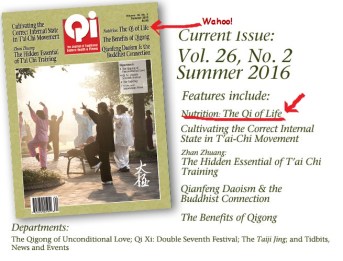
JCM current issue photo

A Good Trade-Off

I don’t know about you, but I’m overwhelmed by all the internet options for marketing books. Where to begin? Which to choose? How much to spend? On a weekly basis, I scour newly discovered sites hour after hour, page by page…then I’m back to feeling overwhelmed, because there are far too many options. I’m driving myself crazy with agida (see this  post) while trying to keep track of all the marketing options and whether or not they’ll work for me.

Then a book blog I subscribe to sent an interesting post this week on marketing our work in, of all places, trade journals. What a great idea! idea light bulb

Lightbulb Moment

Why didn’t I think of that before? Oh, wait…I have…at least once…which is why my work (actually, an excerpt of my nutrition book) is currently published in Qi Journal magazine. Based on the blog’s suggestions, I opened my ‘ideas notebook’ titled “The best way to get something done is to begin” and started making a list of trade publications in my field. Why didn’t I think of this before? 

Qi Journal Summer 2016

All too often, I get caught up with and excited by the new opportunity and forget to continue down that same road to increase my chances of success. Do any of you experience this? You know, the can’t-see-the-forest-for-the-trees kind of thinking? Or maybe the internet is finally frying my gray cells to the point of no return from all the TMI (too much information)…

I’m Workin’ On It…

My trade journal list is a work in progress; I have to do a bit more research but am hopeful of the success I will have, based on my good luck with Qi Journal. When their Summer issue came out, a fellow acupuncturist contacted and informed me that she loved the article/excerpt and purchased a copy of my book. It was the validation (from a professional colleague) I sought for work well done. And it has provided the confidence to submit my work to other journals in my profession.

If you don’t have a ‘profession’ to speak of, don’t be afraid to send your work to trade publications that are related to your subject matter, whether it’s fiction or nonfiction. Take a chance on an area where your target market is already defined – and ripe for the picking.

#tradejournals #amwriting #Tuesdaytips #writersoninstagram #blogging

You Have Too Many Adverbs, We Need To Operate ASAP

A funny, enlightening view of one of my less-than-desirable writing skills (and many others’, I’m sure). Read on…

P. S. Hoffman's avatarP. S. Hoffman

Yesterday, I went to the Doctor’s to have my brain tested. She came into the room, staring at her charts, shaking her head.

“P.S. Hoffman, I’m afraid I have some bad news.”

“What is it? What’s wrong with me?”

View original post 502 more words